Two Million Square Feet of Art History. One Camera.
The Metropolitan Museum of Art holds more than any single visit — or map — can hold. Point, look, and let ELYIO surface what it recognizes as you move through the galleries.
The Met spans two million square feet across seventeen curatorial departments — Egyptian temples, European old masters, arms and armor, American period rooms, a rooftop garden — with no single path through any of it.
Wall labels explain what curators chose to include. They can't tell you why the gallery you just wandered into stopped you cold, or what that armor detail across the room actually is.
What to see
The Met is less a museum than a constellation of museums under one roof. These four departments are where most visitors lose — and then find — themselves.
Egyptian Art
Room after room of the Nile: sarcophagi, tomb reliefs, and — at the center of it all — an actual Roman-era temple reassembled inside a glass-walled hall.
The American Wing
Tiffany windows, Gilbert Stuart's Washington, and a courtyard of period rooms that trace three centuries of American taste under a soaring glass roof facing Central Park.
Arms and Armor
A hall of mounted knights and Japanese samurai gear that reads as sculpture as much as weaponry — one of the most-photographed rooms in the building.
European Paintings
Vermeer, Rembrandt, Van Gogh, Sargent: hundreds of galleries where the walk from one century to the next takes about ten steps.
Masterpiece stories
Emanuel Leutze · 1851
Washington Crossing the Delaware
A ten-foot-wide painting of a moment that mostly didn't happen this way — and still one of the most recognizable images of the American Revolution ever made.
Leutze painted it in Düsseldorf, using the Rhine as a stand-in for the Delaware and German models for the crew; the boat is historically too small and the flag hadn't been designed yet at the time depicted. None of that stopped it from becoming the era's defining image, hung today in its own gallery in the American Wing.
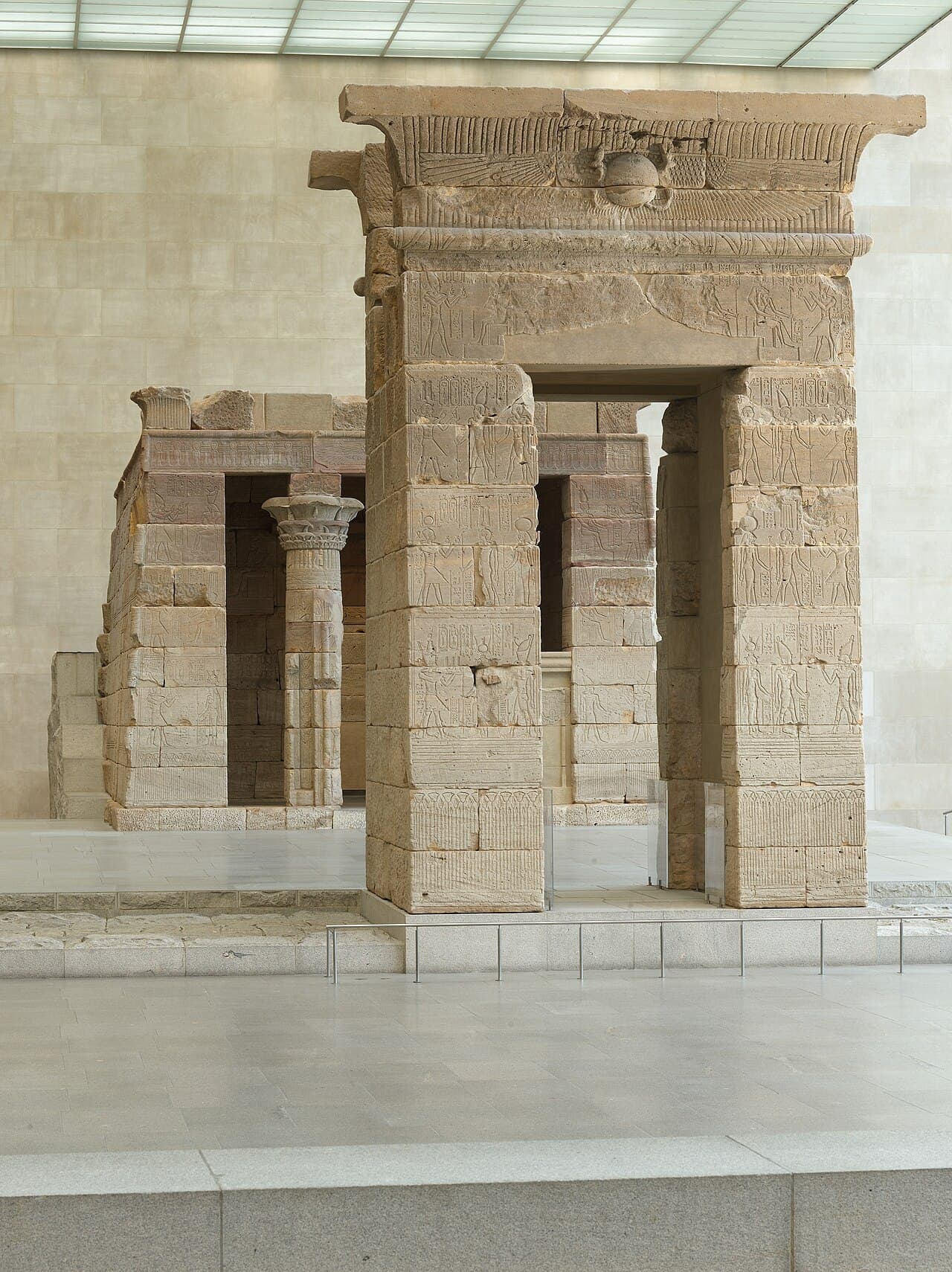
Ancient Egyptian, Roman period · c. 15 BCE
Temple of Dendur
A functioning stone temple to Isis, dismantled block by block in Nubia and rebuilt inside its own glass-walled hall overlooking a reflecting pool.
Egypt gave the temple to the United States in 1965 in gratitude for American support helping save Nubian monuments from the floodwaters of the Aswan High Dam; it took until 1978 to reconstruct all 661 sandstone blocks inside the purpose-built wing.
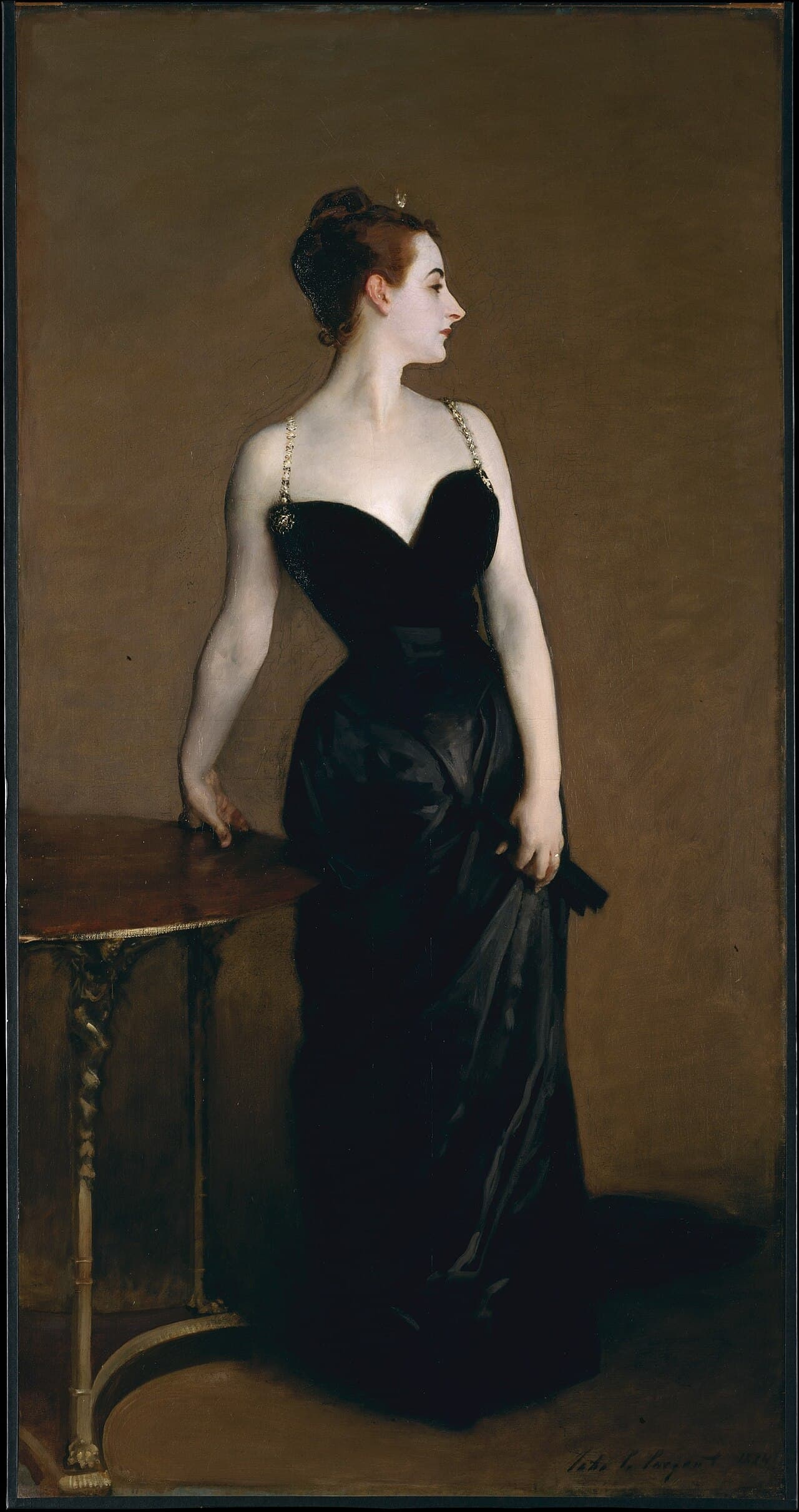
John Singer Sargent · 1884
Madame X
The portrait that scandalized Paris — a single fallen shoulder strap turned a society painting into a career crisis.
Sargent's portrait of Virginie Amélie Avegno Gautreau caused enough outrage at the 1884 Paris Salon that he repainted the strap back onto her shoulder and eventually left France for London. He later called it the best thing he'd ever done.
Vincent van Gogh · 1889
Wheat Field with Cypresses
Painted from the asylum garden at Saint-Rémy, one of several Van Goghs in the Met's collection — and proof the wind in his late landscapes was never just weather.
Van Gogh made three versions of this composition in the months following his stay at the Saint-Paul-de-Mausole asylum; the Met's canvas is widely considered the most resolved of the three.
How to explore with ELYIO
Most first-time visitors try to see everything and remember very little. The better approach: pick two or three departments, follow the natural drift between adjacent galleries, and let the building's scale work for you instead of against it.
Self-guided visits
There's no single correct route through The Met, and no printed map fully replaces standing in front of something and wanting to know more about it right now, mid-gallery, without hunting for the right wall label.
Traditional audio guide vs. ELYIO
Traditional audio guide
Study a floor plan in advance and hope you remember which numbered gallery held what.
Circle back to a wall label, or wait for a guided tour timed to your visit.
Leave with photos of dozens of works and no memory of most of their names.
With ELYIO
Walk in and start looking — no pre-visit homework required.
Point your camera at a painting, an artifact, a case of armor, and let ELYIO's AI recognition surface what it identifies, right there.
Build a personal record of what you actually stopped for, in the order you found it.
The Met's main building sits on Fifth Avenue along Central Park, with entrances that open onto the Great Hall before the collection fans out across two floors and multiple wings. A separate Met location, The Cloisters, holds the museum's medieval European collection uptown in Fort Tryon Park. Given the sheer scale, comfortable shoes and a willingness to skip entire wings on any single visit are more useful than any single route.
Frequently asked questions
Does ELYIO recognize everything in The Met's collection?
The Met holds well over a million objects, and no recognition tool — including ELYIO — covers a collection at that scale in full. Point your camera at what catches your eye, and ELYIO's AI identifies what it recognizes; some pieces, especially lesser-known works, may not yet return a match.
Is ELYIO affiliated with or endorsed by The Metropolitan Museum of Art?
No. ELYIO is an independent camera-recognition app and is not partnered with, endorsed by, or operated on behalf of The Met.
Do I need a fixed route or tour plan to use ELYIO at The Met?
No. ELYIO isn't built around a numbered tour or a fixed order of galleries. It's designed for however you actually move through a museum — including doubling back, skipping wings, and following whatever catches your attention.
Can ELYIO tell me the history behind the Temple of Dendur or other large installations?
When ELYIO's AI recognizes a piece, it surfaces available context to go with it. For a landmark installation like the Temple of Dendur, that can include background most visitors wouldn't otherwise get without a guide or deep research.
Do I need Wi-Fi or a museum guidebook to use ELYIO at The Met?
You need your phone's camera and a connection. ELYIO works alongside whatever wall text or audio guide the museum provides — it doesn't replace the museum's own materials, and it doesn't require you to plan ahead.