Six centuries of Dürer, Vermeer, Rembrandt and Bruegel, in galleries as quiet as they are extraordinary. Point your camera and let ELYIO's AI recognition surface what it can, artwork by artwork.
Fifty-three rooms of German, Flemish, Dutch and Italian painting, minimal crowds, and — for most visitors — almost no English wall text explaining why any of it matters.
The Gemäldegalerie rewards slow looking, but slow looking without context can feel like homework. A phone in your pocket shouldn't mean a search-engine detour every time a painting stops you cold.
What to see
The collection moves roughly chronologically from the entrance, splitting into Italian art on one side and German, Flemish and Dutch art on the other — though corridors loop back constantly, so there's no wrong way to wander. Four areas reward extra time:
The Octagonal Rembrandt Room
A room built around a single artist — rare in any museum — holding some of the finest Rembrandts outside Amsterdam, from tender biblical scenes to unflinching self-portraiture.
The Dürer & German Renaissance Galleries
Portraits so precise they feel like photographs three centuries early, alongside Cranach and Holbein — among the strongest Northern Renaissance holdings outside Germany's other two major collections.
The Dutch Golden Age Corridor
Vermeer, Frans Hals and Pieter de Hooch share wall space here, each working the same themes — light, domestic interiors, quiet moral tension — in entirely different registers.
Early Netherlandish & Flemish Rooms
Van Eyck, van der Weyden and Bruegel the Elder, whose crowded, proverb-stuffed village panoramas reward the kind of close, unhurried looking this museum was built for.
Masterpiece stories
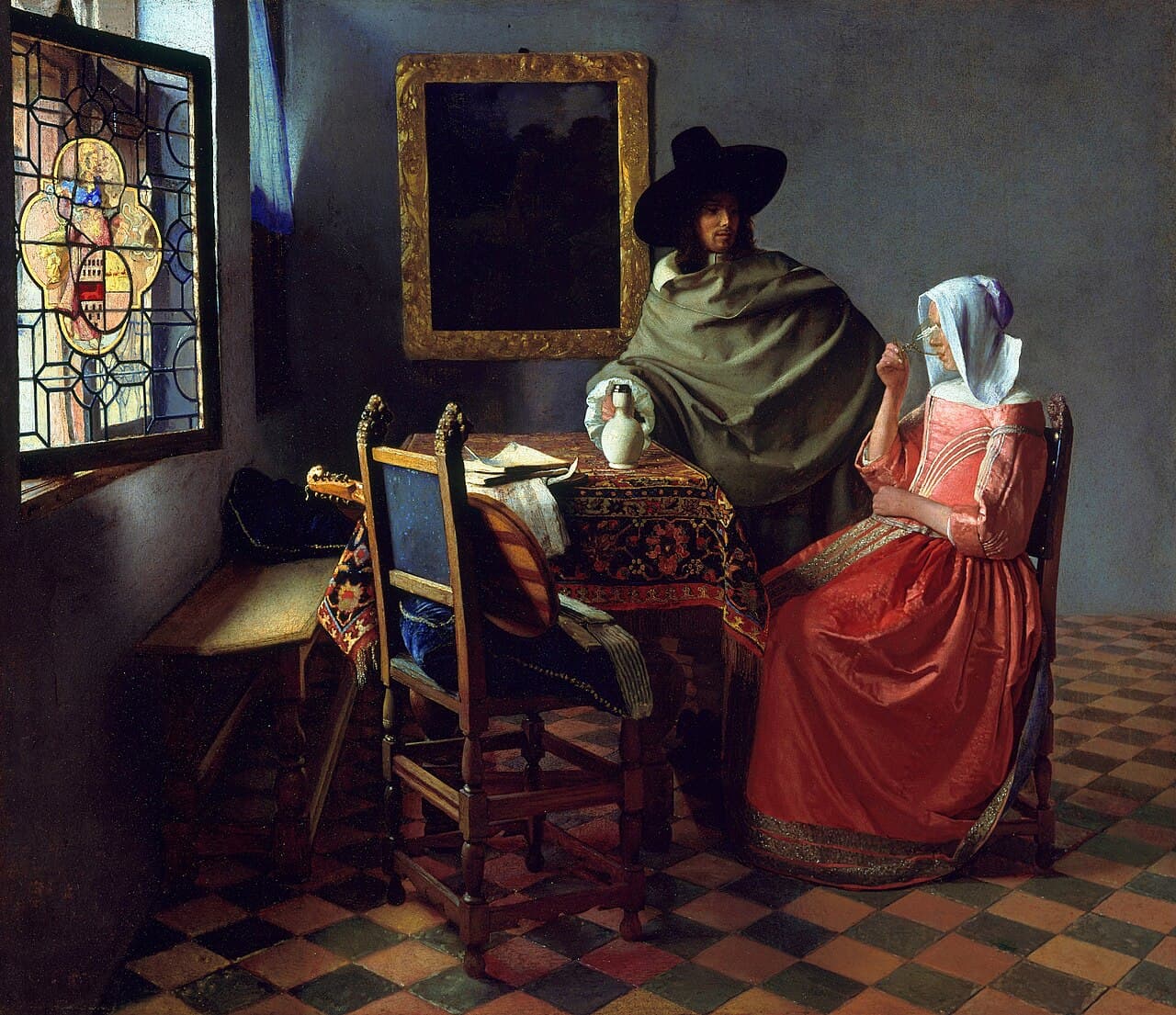
Johannes Vermeer · c. 1660
The Wine Glass
A woman drains her glass while a man leans in to pour more — one of only two Vermeers in Berlin, and a masterclass in what light can imply about the tension between two people.
Painted when Vermeer was around 27, this transitional work borrows its composition from Pieter de Hooch but pushes the interior toward a wealthier, more ambiguous social scene — a coat of arms in the stained glass, a discarded cittern, and a figure of Temperance watching from the window.
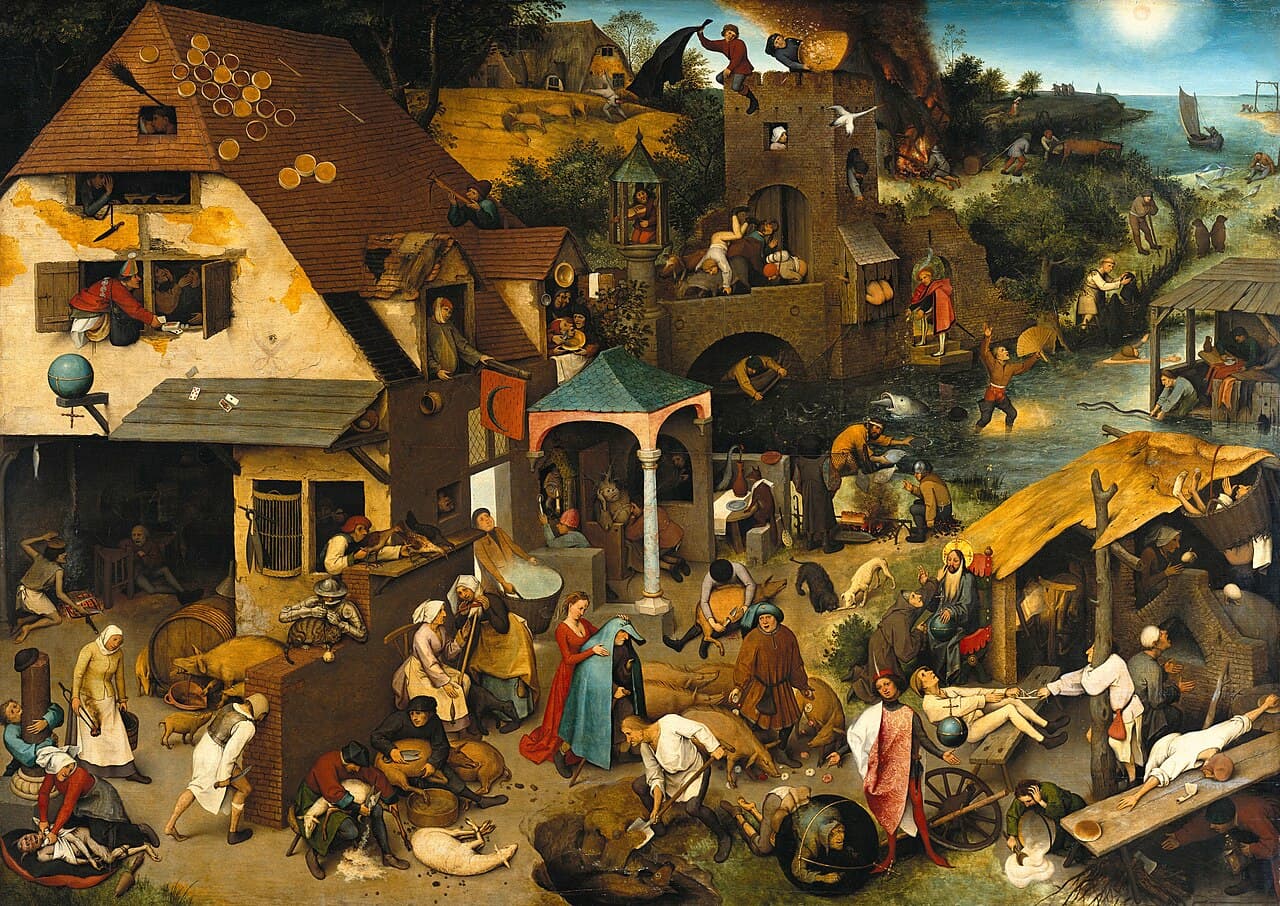
Pieter Bruegel the Elder · 1559
Netherlandish Proverbs
More than one hundred Flemish proverbs and idioms packed into a single village scene — a 16th-century satire so dense it still rewards a magnifying glass.
Bruegel translates figures of speech into literal, often absurd images — a man banging his head against a wall, another casting roses before swine — building a panoramic portrait of human folly that reads differently every time you look.
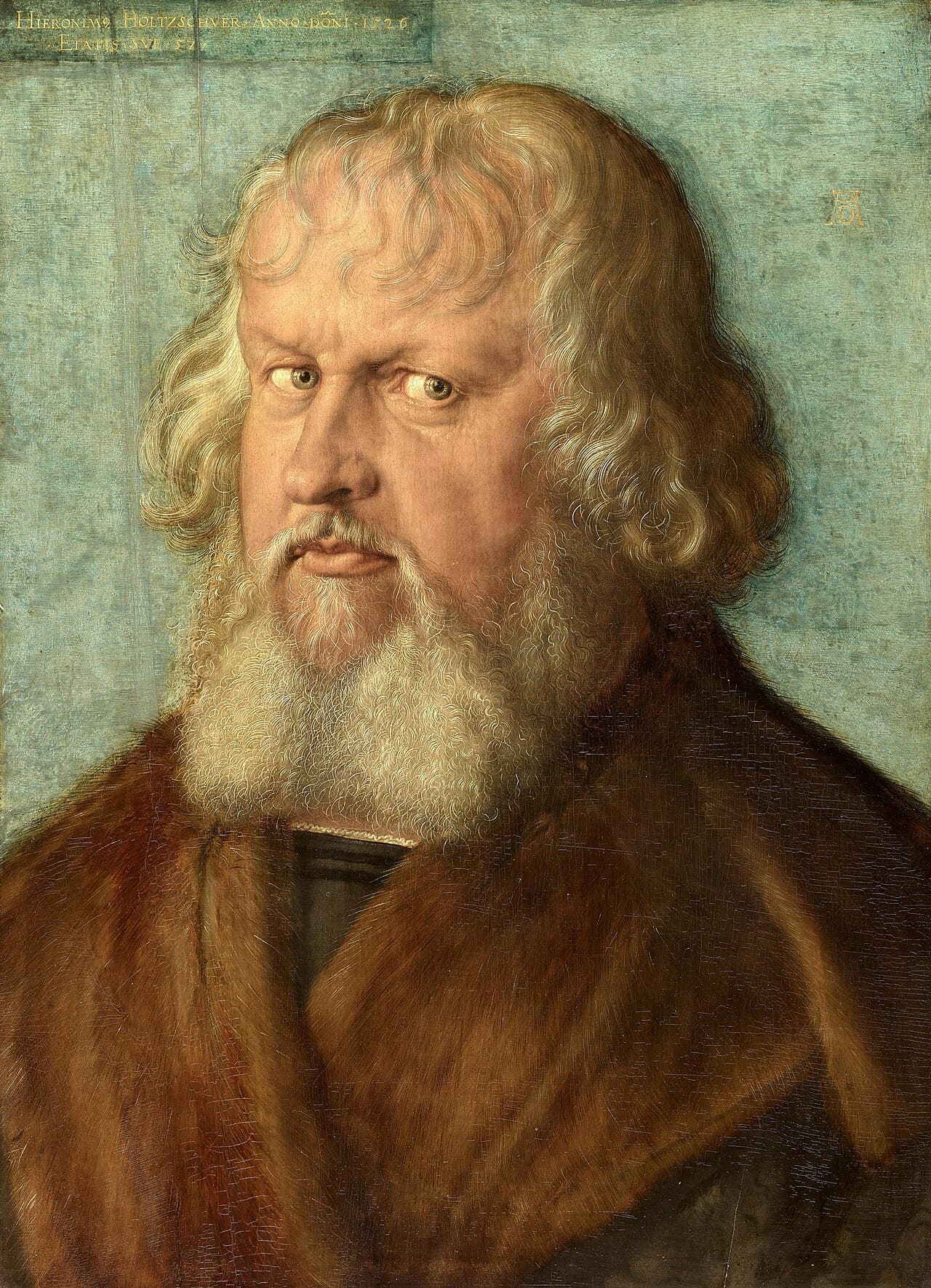
Albrecht Dürer · 1526
Portrait of Hieronymus Holzschuher
A Nuremberg patrician rendered with such exacting precision — every hair, every fold of fur — that the sitter seems to be looking back at you across five centuries.
One of Dürer's late masterworks, painted for a friend and fellow city councilman; the Gemäldegalerie's Dürer holdings are among the finest outside his native Nuremberg.
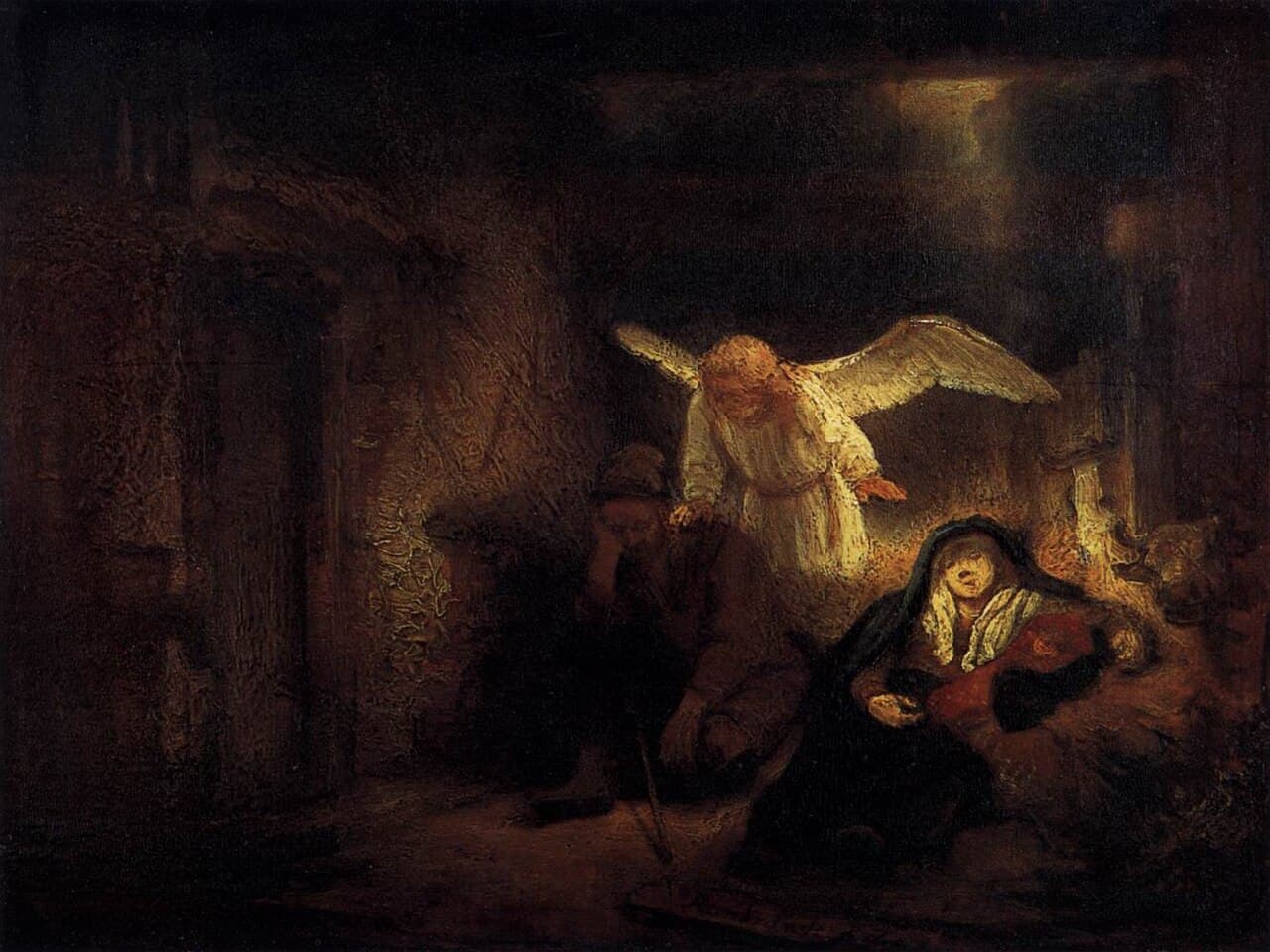
Rembrandt · c. 1645
Joseph's Dream
Firelight and shadow do almost all the storytelling in this hushed nocturne — a small, glowing scene of Joseph being warned in his sleep to flee to Egypt.
Hung in the museum's dedicated octagonal Rembrandt room, this is a prime example of the artist's mature handling of darkness as a compositional tool rather than an absence of light.
How to explore with ELYIO
There's no single correct route through 53 rooms and 72 spaces spread over two kilometers of galleries — the layout is built for looping back, not marching forward. Most visitors let the collection's rough chronology guide them: Italian art along one flank, German, Flemish and Dutch along the other, meeting again and again in the long central hall.
Self-guided visits
Because there's no house-assigned path, self-guided visits are less about following a number sequence and more about following your own attention. Let a painting stop you, point your camera, and let ELYIO's AI recognition surface the context ELYIO's database has for that specific piece — a caption, an artist note, a reason it matters — before you move on to whatever room draws you next.
Traditional audio guide vs. ELYIO
Traditional audio guide
Squint at a small printed label, then a QR code, then your phone's browser
Rent an audio guide and follow its fixed track, room by room
Wonder why the docent's rehearsed script skipped the painting you actually stopped for
With ELYIO
Point your camera at whatever painting actually stopped you
Get what ELYIO's AI recognition can surface for that specific work, on the spot
Move at your own pace — no headset, no script, no fixed order
The Gemäldegalerie sits in the Kulturforum, alongside the Neue Nationalgalerie and the Kunstgewerbemuseum, southwest of Potsdamer Platz — easy to combine with a wider afternoon of museum-hopping. It draws a fraction of the foot traffic of Museum Island, so galleries often feel unusually calm even during peak tourist season. As part of the Berlin State Museums network, some works occasionally travel or rotate off view for conservation, so a painting you've researched in advance may not always be on the wall that day.
Frequently asked questions
Is ELYIO officially affiliated with the Gemäldegalerie?
No. ELYIO is an independent app. We're not partnered with or endorsed by the Gemäldegalerie or the Staatliche Museen zu Berlin — we simply built a database of artworks you might encounter there and a camera tool to help identify them.
Will ELYIO recognize every painting in the museum?
Not yet, and we don't want to overpromise. The Gemäldegalerie is currently in controlled preview on ELYIO — our recognition covers a growing set of works, prioritizing major highlights, but the full collection of roughly 1,250 paintings isn't all mapped yet. Point your camera and see what comes back.
Do I need to follow a specific route or numbered tour?
No — and honestly, the museum itself doesn't have one. The galleries loop back to a central hall constantly, so wander by instinct and use ELYIO on whatever catches your eye, in whatever order you reach it.
What if ELYIO can't identify a painting I'm looking at?
That happens, especially with works outside the collection's best-known highlights, or during this preview phase. We'd rather say 'we don't have that yet' than guess — accuracy matters more than false confidence.
Is the Gemäldegalerie worth visiting if I've already seen the Louvre or the Uffizi?
Yes — for a different reason. It isn't trying to be the biggest collection; it's one of the most tightly curated, with Dürer, Vermeer, Bruegel and an entire room devoted to Rembrandt, usually without the crowds of Europe's headline museums.