More than 2,300 paintings hang across the Wilkins building and the Sainsbury Wing, with no obligation to follow a single route. Wall labels are informative but easy to miss in a busy room, and a phone search for 'that painting with the mirror' rarely lands on the right saint, donor, or decade.
ELYIO turns the camera you already have into a quiet second opinion. Point it at a canvas that's caught your eye, and the app tries to identify what it can — artist, title, era — so you can look longer and read less.
What to see
The collection reads roughly chronologically, from gold-ground altarpieces to the edge of the 20th century, but nothing stops you from wandering against the grain.
Early Renaissance & Gold-Ground Panels
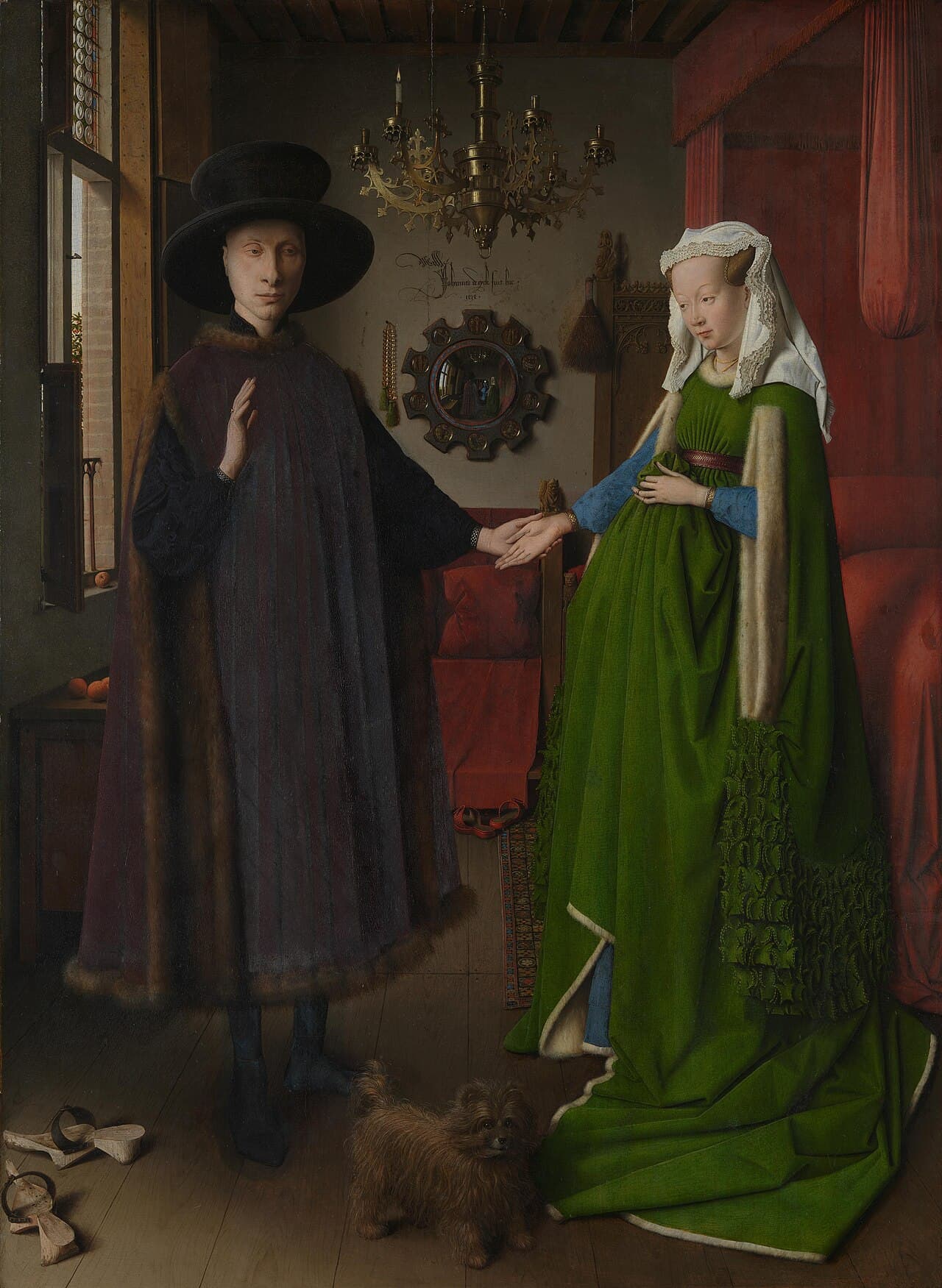
Sainsbury Wing rooms holding Italian and Netherlandish works from the 1200s–1500s, including Van Eyck's famously enigmatic interiors and luminous altarpieces by Piero della Francesca and Uccello.
Dutch and Flemish Interiors
Rembrandt self-portraits, Vermeer's hush, and the domestic clarity of the Dutch Golden Age, hung in rooms built for close, unhurried looking.
British Landscape and Turner
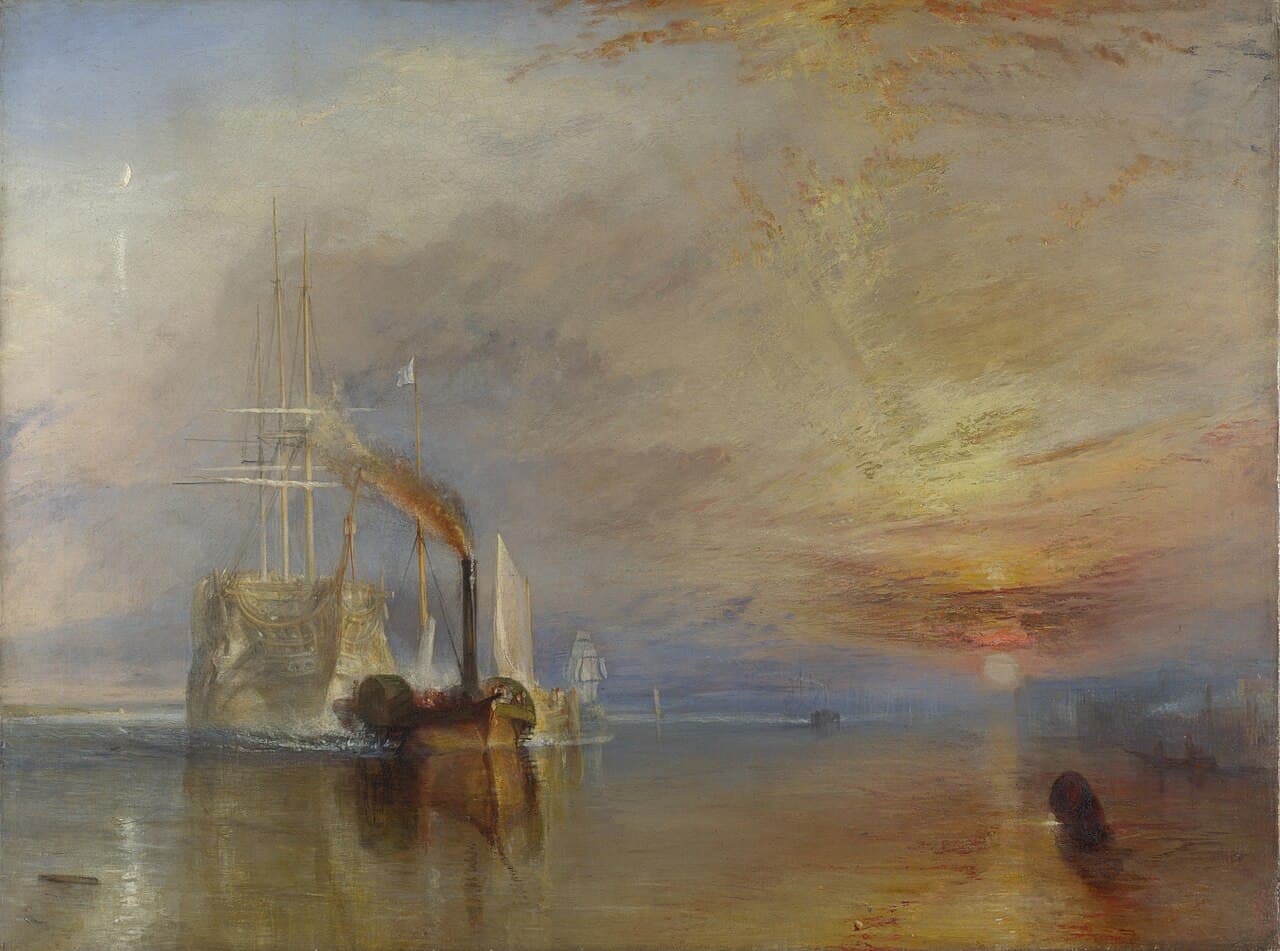
Constable's skies and Turner's dissolving light, shown alongside the Claude Lorrain paintings Turner asked to be hung beside his own.
Impressionism and Post-Impressionism
Monet, Seurat, Cézanne and Van Gogh close the chronology — a single run of rooms where the 19th century visibly changes its mind about what painting is for.
Masterpiece stories
Jan van Eyck · 1434
The Arnolfini Portrait
A convex mirror the size of a coin, reflecting a room — and two more figures — that shouldn't fit in it.
One of the most examined paintings in Western art: a merchant, his wife, a mirror, a dog, and five centuries of arguments about what's actually happening in the room.
J.M.W. Turner · 1839
The Fighting Temeraire
A warship that fought at Trafalgar, towed to the scrapyard by a small, smoke-black steam tug — under a sunset that looks like it's grieving.
Turner's own favourite among his works, and routinely voted Britain's best-loved painting; it hangs a short walk from the square named after the battle the ship survived.
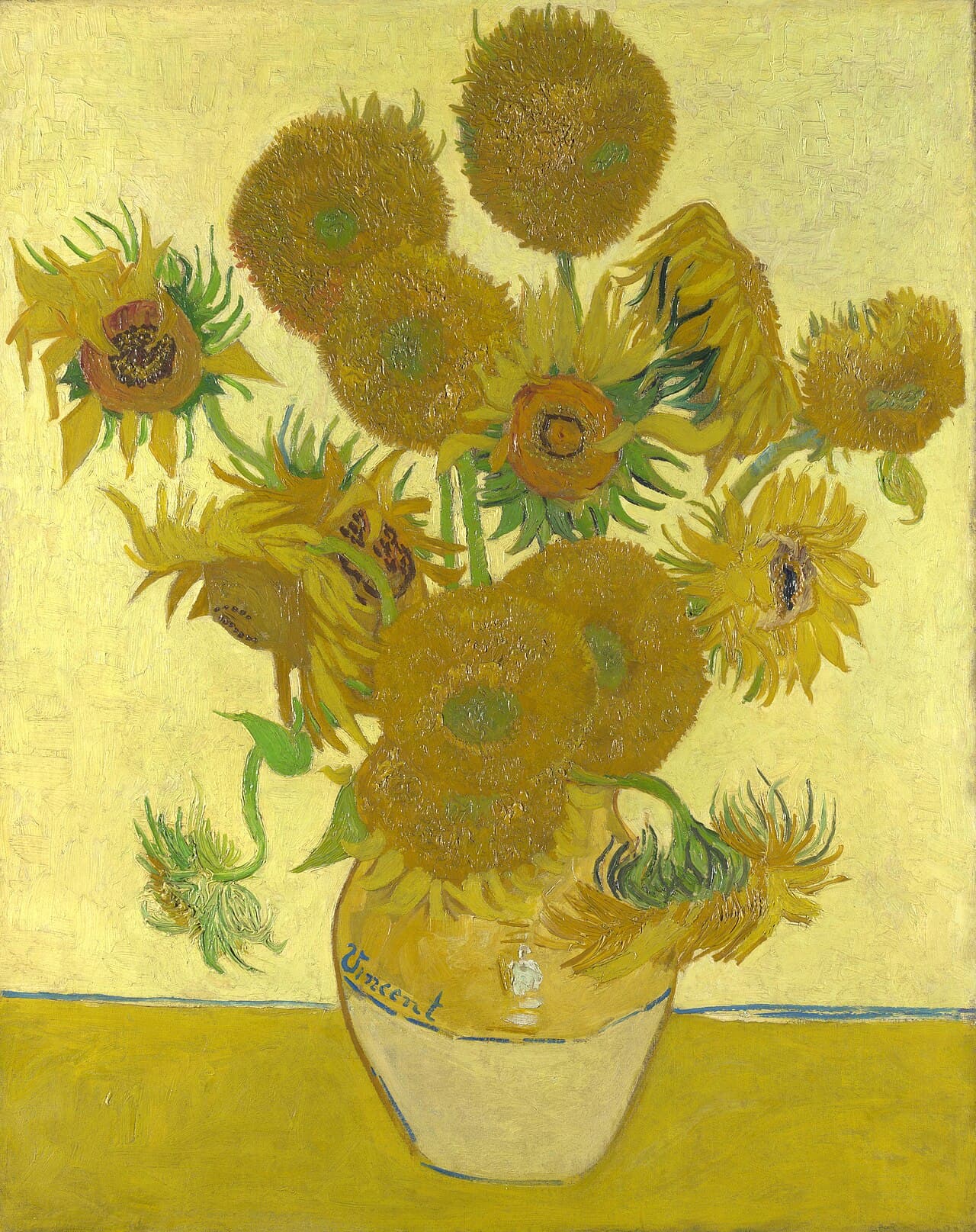
Vincent van Gogh · 1888
Sunflowers
Fourteen sunflowers in a jar, painted in a fever of yellow to welcome a friend who was, famously, about to disappoint him.
One of five surviving versions of the subject, painted in Arles for Gauguin's arrival — now one of the most photographed paintings in London.
How to explore with ELYIO
There's no correct order and no queue for a single 'must-see' room — the galleries are built to be crossed and recrossed. Many visitors pick a wing by instinct (gold-ground panels, Dutch interiors, Turner's skies) and let one painting lead to the next.
Self-guided visits
Bring ELYIO instead of a fixed itinerary. Lift your phone toward whatever's held your attention, and let the recognition fill in the who and when, so the story doesn't depend on finding the right label first.
Traditional audio guide vs. ELYIO
Traditional audio guide
Squinting at a small printed label while a dozen other visitors wait their turn
Typing half-remembered details into a search engine back at the hotel
Following a fixed printed itinerary that ignores what actually caught your eye
With ELYIO
Point your camera at the canvas and get an identification on the spot
Ask follow-up questions about the artist or period in plain language
Wander freely — ELYIO adapts to whatever painting stops you next
The National Gallery occupies the Wilkins building and the Sainsbury Wing on the north side of Trafalgar Square, a short walk from Charing Cross station. General admission to the main collection has been free since the Gallery's founding, though ticketed exhibitions run separately. Because ELYIO's recognition for this museum is still in controlled preview, treat it as a companion for the paintings it can identify today, not a substitute for the Gallery's own wall texts and guides.
Frequently asked questions
Is the National Gallery in London free to enter?
General admission to the permanent collection is free, as it has been since the Gallery opened in 1824. Temporary loan exhibitions are usually ticketed separately.
Where is Van Gogh's Sunflowers hung?
Sunflowers is part of the Gallery's Post-Impressionist rooms, in the chronological run of galleries covering the late 19th century.
Is the Arnolfini Portrait really at the National Gallery, London?
Yes — Jan van Eyck's 1434 panel has been in the National Gallery's collection since 1842 and remains one of its most closely studied works.
How long should I plan for a visit?
There's no fixed route, so timing depends entirely on you: an hour is enough to see a handful of highlights, while a full morning suits a slower walk through several rooms.
Does ELYIO work on every painting in the National Gallery?
Not yet. ELYIO's recognition for this museum is in controlled preview, so point your camera at what interests you and the app will identify what it currently can — coverage is expanding, not complete.