Amsterdam's great house of the Dutch Golden Age holds Rembrandt, Vermeer, and eight centuries of craft. ELYIO's camera-first recognition helps you identify what it can, painting by painting, as you walk.
Room after room of unlabeled brilliance — a museum this size can turn a masterpiece into a blur of gilt frames and squinting at wall text in three languages.
Audio guides march you through a fixed number of stops, in a fixed order, while the painting you actually stopped for is three rooms behind.
What to see
Four wings, more than eighty galleries, and eight centuries of Dutch art — here's roughly where the drama concentrates.
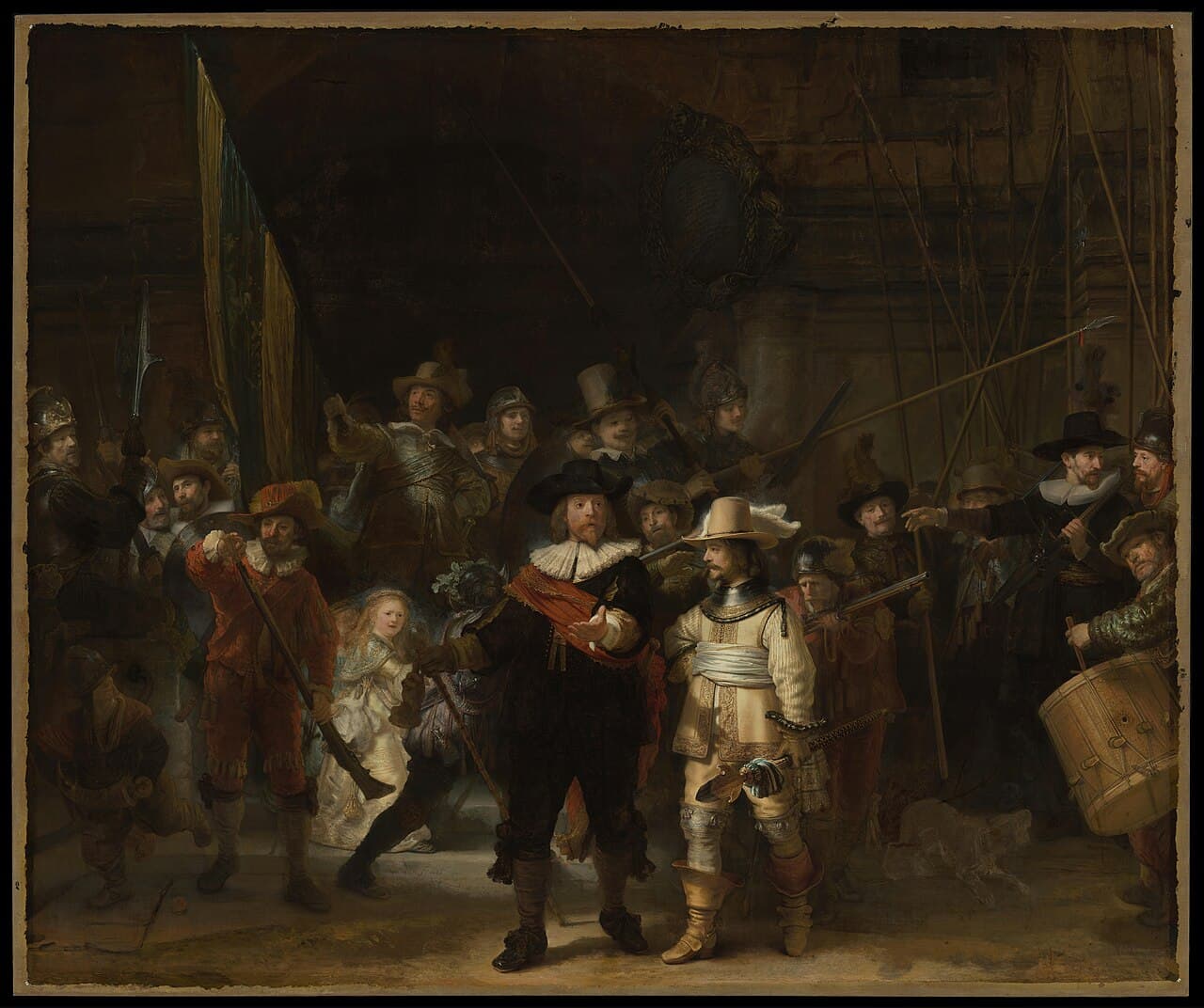
The Gallery of Honour
The museum's ceremonial spine, where Golden Age portraits and history paintings build toward The Night Watch at the far end — a deliberate, theatrical climax.
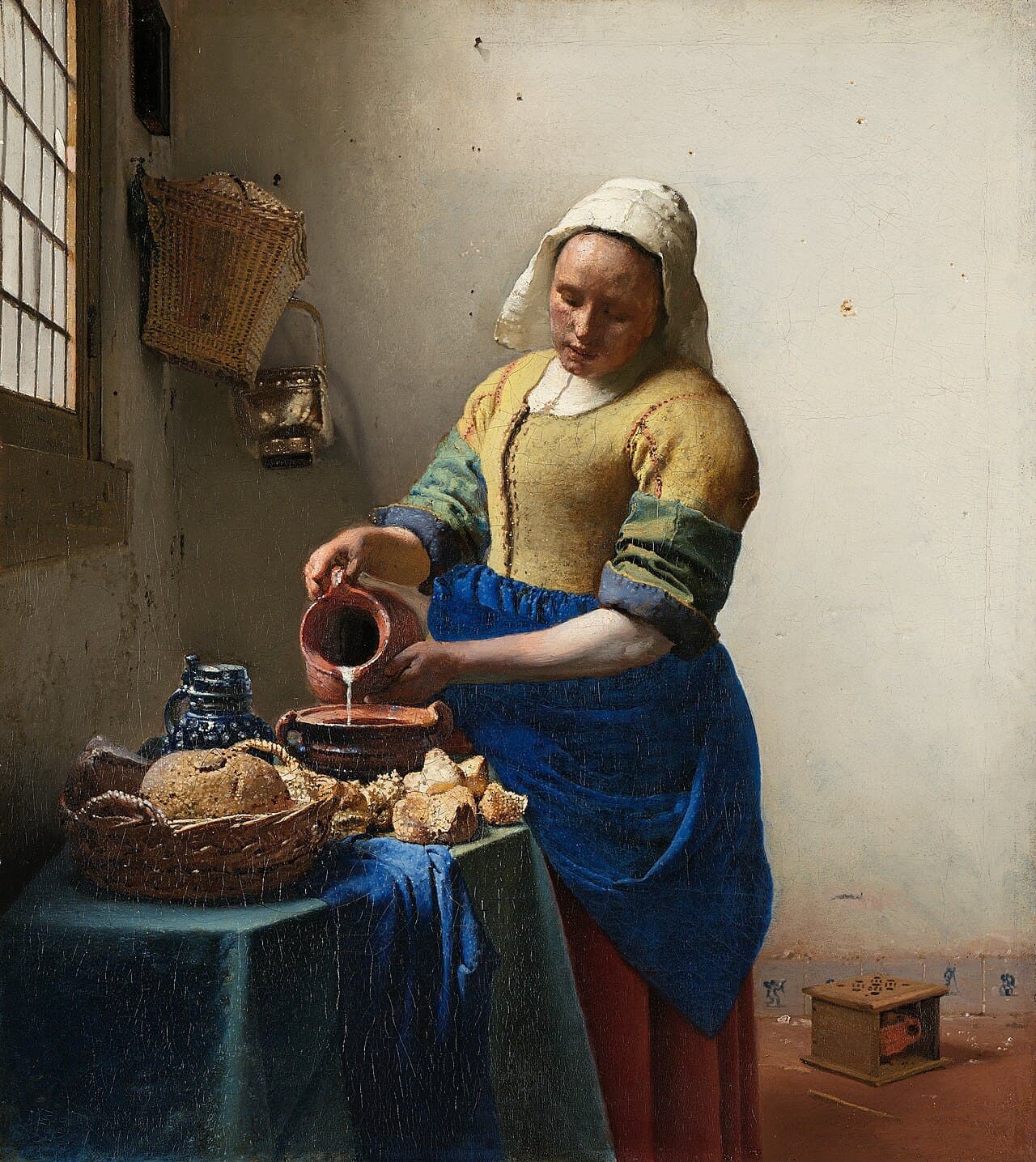
Vermeer's Intimate Interiors
A cluster of hushed domestic scenes, including The Milkmaid, where Delft's quiet light does more work than any gesture.
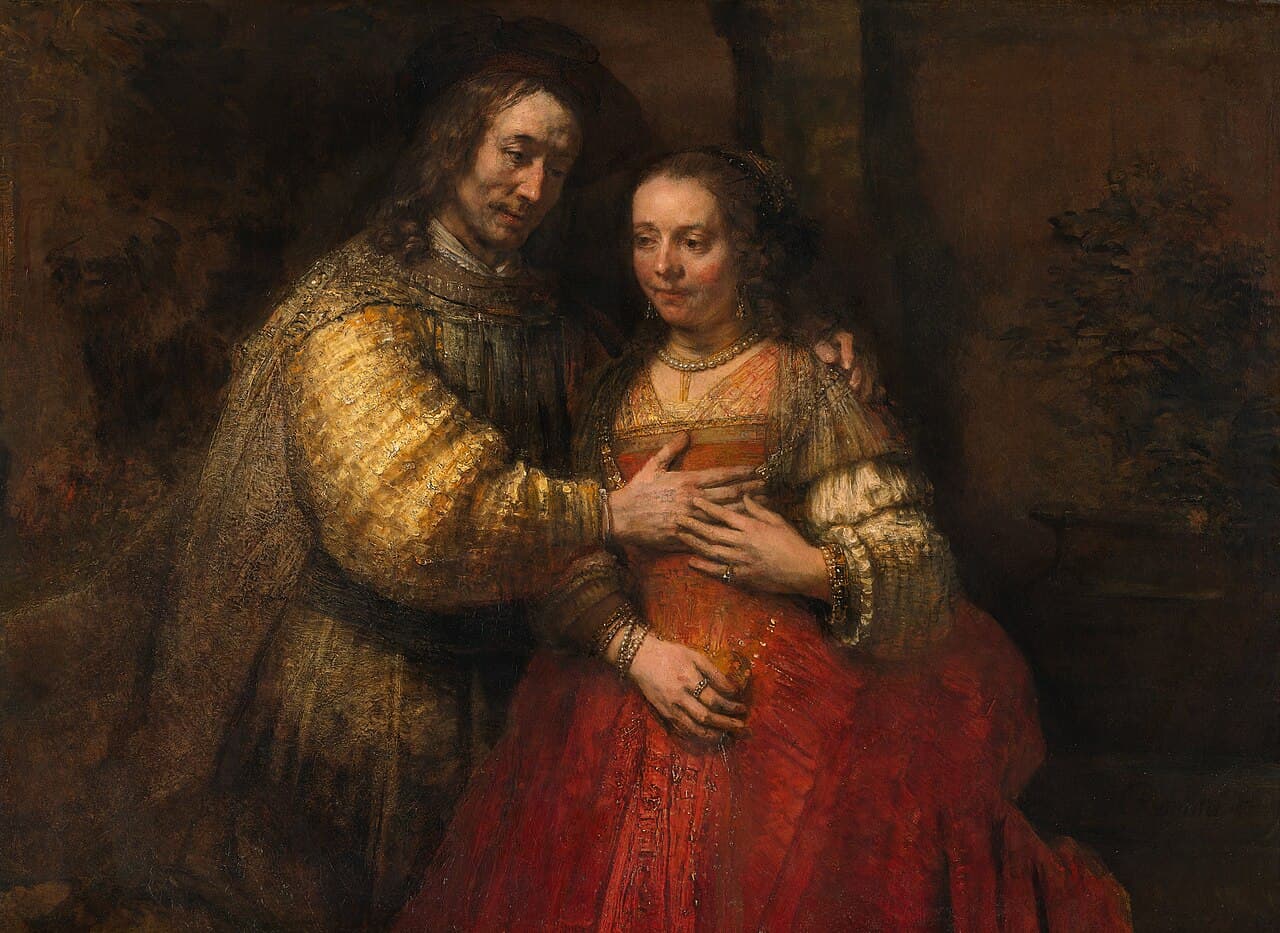
The Rembrandt Rooms
Self-portraits, biblical drama, and The Jewish Bride's tender, unresolved embrace trace one restless artist's whole career.
Delftware and the Golden Age Interior
Blue-and-white porcelain, dollhouses, and silver reveal the domestic world the painters were actually depicting.
Masterpiece stories
Rembrandt van Rijn · 1642
The Night Watch
A civic militia marches straight out of the canvas — and toward you — in a group portrait historians still call the most theatrical ever painted.
Rembrandt turned a routine commission for a company of Amsterdam militiamen into a study in motion and shadow, using invented light to make thirty-four figures feel like they're stepping into the room. The 'night' in the title is a misnomer from centuries of darkened varnish; conservators have studied the canvas in public view since 2019.
Johannes Vermeer · c. 1658–1661
The Milkmaid
A kitchen maid pours milk in near-total silence, and somehow the whole Dutch Golden Age fits inside that one unhurried gesture.
Vermeer painted perhaps three dozen pictures in his lifetime; this small canvas, easy to walk past in a hurry, is the museum's own pick for one of its finest works. Look for the pinpoints of light on the bread crust — a precision so exact it once fed theories that Vermeer relied on optical devices.
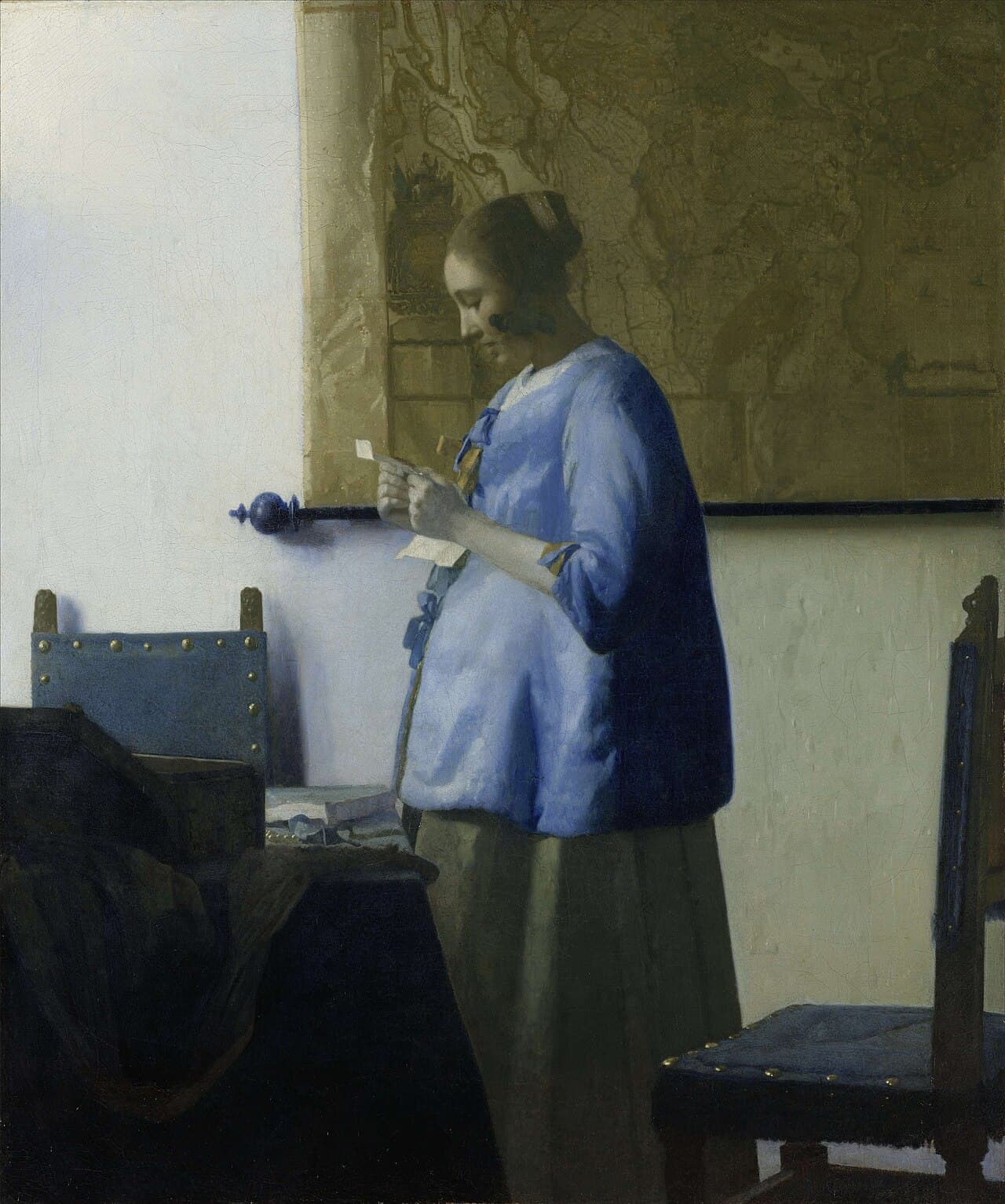
Johannes Vermeer · c. 1663
Woman Reading a Letter
A woman in blue reads in complete privacy, a map on the wall behind her hinting at whoever is far away and writing to her.
One of only a handful of Vermeers on public view in the Netherlands, the painting's power comes from its stillness — no anecdote, no punchline, just a woman entirely absorbed in her own news.
Rembrandt van Rijn · c. 1665
The Jewish Bride
A couple's hands rest together in an embrace so tender that Van Gogh is said to have wished he could trade ten years of his life for a fortnight sitting in front of it.
Rembrandt's late style abandons crisp detail for thick, almost sculptural paint. The sitters' identities are still debated, but the tenderness of the gesture needs no caption.
How to explore with ELYIO
There's no single correct path through the Rijksmuseum's eighty-plus rooms, and the museum doesn't hand you one — the Gallery of Honour simply points toward its best-known works and lets the side rooms surprise you. ELYIO works the same way: skip the wall text, hold up your camera at whatever stops you, and let AI recognition tell you what it can, gallery by gallery, in whatever order you actually walk.
Self-guided visits
Self-guided visitors tend to do best treating the museum as a handful of neighborhoods rather than one long corridor — Golden Age portraiture, Vermeer's interiors, decorative arts, and the modern wing all reward slow loops rather than a sprint toward one painting.
Traditional audio guide vs. ELYIO
Traditional audio guide
Laminated maps and numbered audio tracks that assume everyone wants the same forty-minute story
Wall labels in a handful of languages, often crowded three-deep by the time you reach them
A gift-shop guidebook that's already out of date by the time a gallery gets rehung
With ELYIO
Point your camera at whatever actually catches your eye, in whichever gallery you're standing in
Get context in your own language, at your own pace, without waiting for a headset
AI recognition that keeps learning the collection — today's answer, not a guidebook printed years ago
The Rijksmuseum spans four levels around a central atrium, with the second-floor Gallery of Honour acting as its natural spine. Free museum Wi-Fi and phone signal are generally reliable throughout the main galleries, which is what ELYIO's camera recognition needs to work as you walk. Bags above a certain size typically need to be checked, so keep a free hand for your phone rather than juggling a backpack.
Frequently asked questions
Is ELYIO officially connected to the Rijksmuseum?
No. ELYIO is an independent app that uses AI image recognition to help visitors identify artworks they photograph. We are not affiliated with, endorsed by, or partnered with the Rijksmuseum or any museum featured in this guide.
Will ELYIO recognize every painting in the museum?
Not yet, and not always. ELYIO's recognition is expanding gallery by gallery. Point your camera at a work and the app will identify what it can — for pieces it doesn't yet know, it will say so rather than guess.
Does ELYIO give me a fixed tour route to follow?
No. There's no numbered itinerary. ELYIO responds to whatever you photograph, in whatever order you walk the museum, so you stay in control of your own visit.
Do I need to book museum tickets through ELYIO?
No. ELYIO doesn't sell or book museum admission. Get your Rijksmuseum tickets directly from the museum, then use ELYIO once you're inside.
Does ELYIO work without renting a museum audio guide?
Yes — that's the idea. Instead of renting a device and following its numbered stops, you use your own phone's camera to get context on whatever you're actually standing in front of.