Four Centuries of Habsburg Collecting. One Camera to Read It.
Inside the gilded halls of the Kunsthistorisches Museum, Bruegel's snowbound hunters share walls with Titian, Vermeer, and Caravaggio. Point your phone, and ELYIO's recognition tells you what it can, gallery by gallery.
Laminated room guides that separate the label from the painting by three doorways and a staircase.
A pre-set audio tour that insists on room 10 before room 3 — even when what actually stopped you was in room 3.
Wall text in German, English, and a paragraph of curatorial jargon, when all you wanted to know was who painted the man in red.
What to see
The Kunsthistorisches Museum is really four collections stacked under one dome — the Habsburgs never threw anything out. Here is where the walking starts to make sense.
The Picture Gallery
Two floors of Northern and Italian Old Masters, arranged the way Habsburg archdukes actually collected them: Bruegel next to Titian, Dürer down the hall from Caravaggio. Most visitors spend the bulk of their time here — and it's where ELYIO has the most to say.
The Kunstkammer
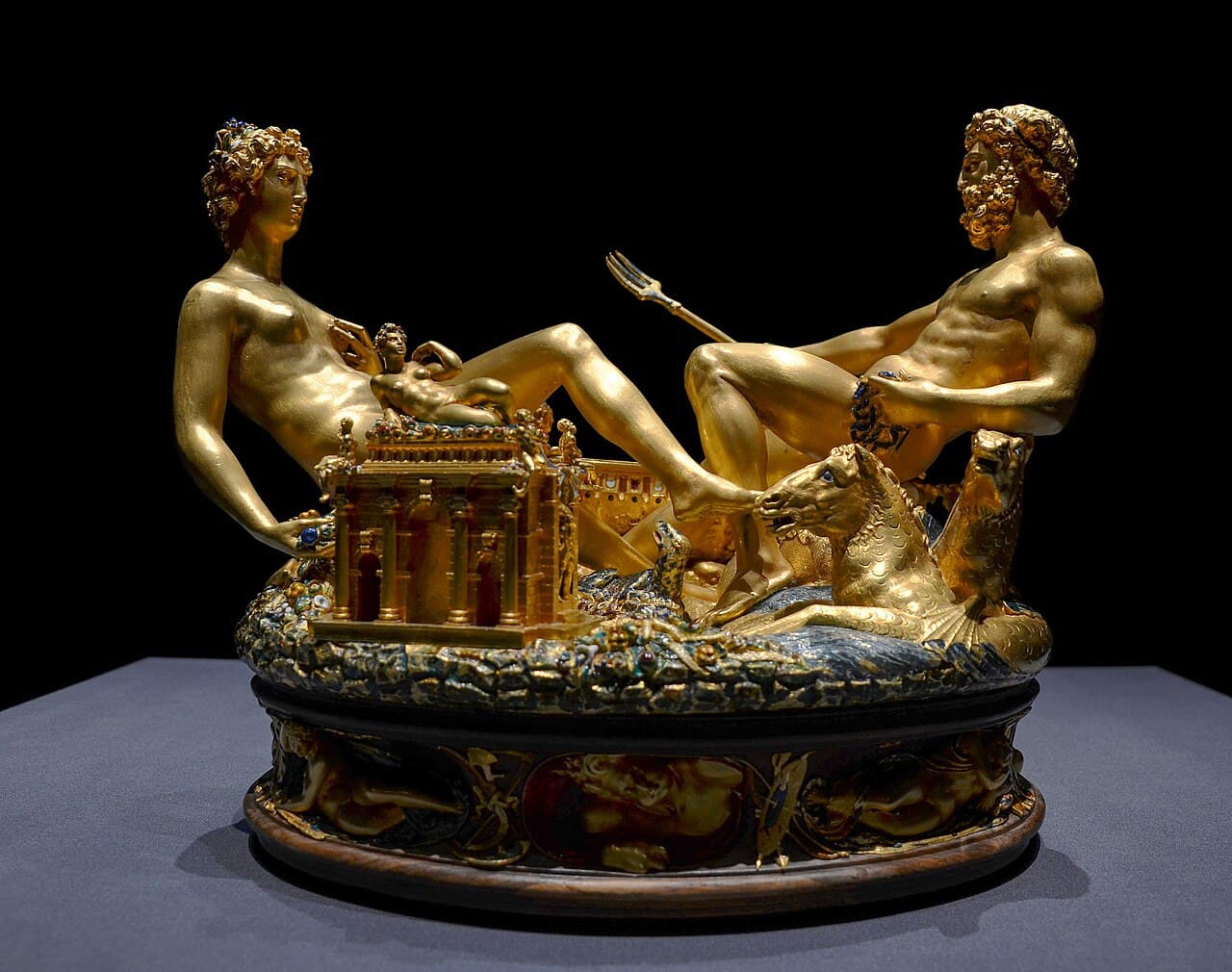
The Habsburgs' original 'cabinet of wonders' — coral, ivory, automata, and Benvenuto Cellini's gold-and-enamel Saliera, a table sculpture built for a French king and later stolen (then recovered) from this very room.
Egyptian and Near Eastern Collection
Sarcophagi, tomb reliefs, and monumental sculpture assembled by 19th-century imperial expeditions, presented on a scale that surprises visitors who came only for the paintings.
Greek and Roman Antiquities
Marble, bronze, and the museum's coin cabinet, tracing classical influence through to the Renaissance painters hanging two floors above.
Masterpiece stories
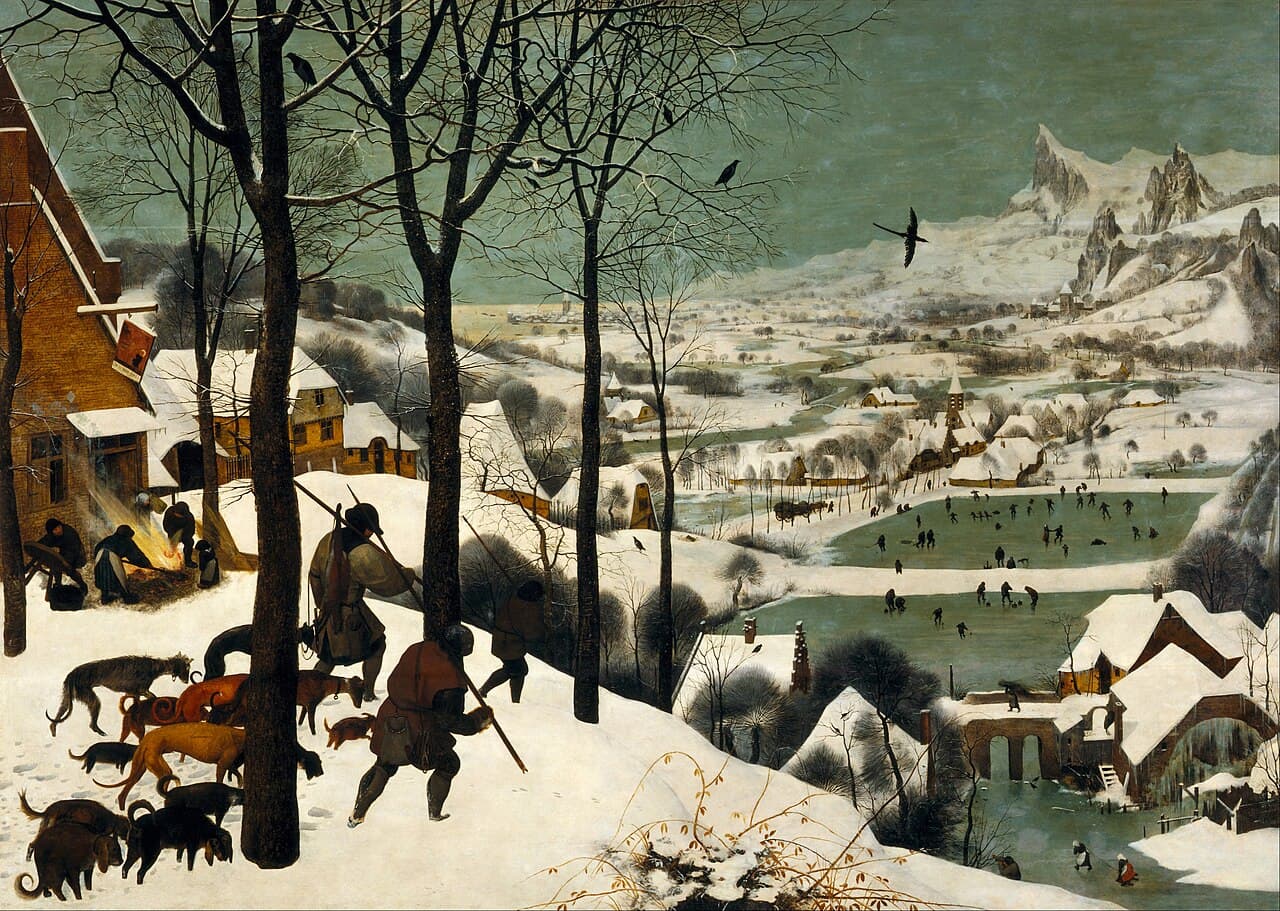
Pieter Bruegel the Elder · 1565
The Hunters in the Snow
A winter so complete you can feel it — bare trees, frozen ponds, dogs with their tails down, painted for a Habsburg banker's dining room and never really left home.
Part of Bruegel's series on the months of the year, this panel represents December–January and is among the most reproduced winter landscapes in Western art. It hangs in the Picture Gallery alongside four of its surviving companions.
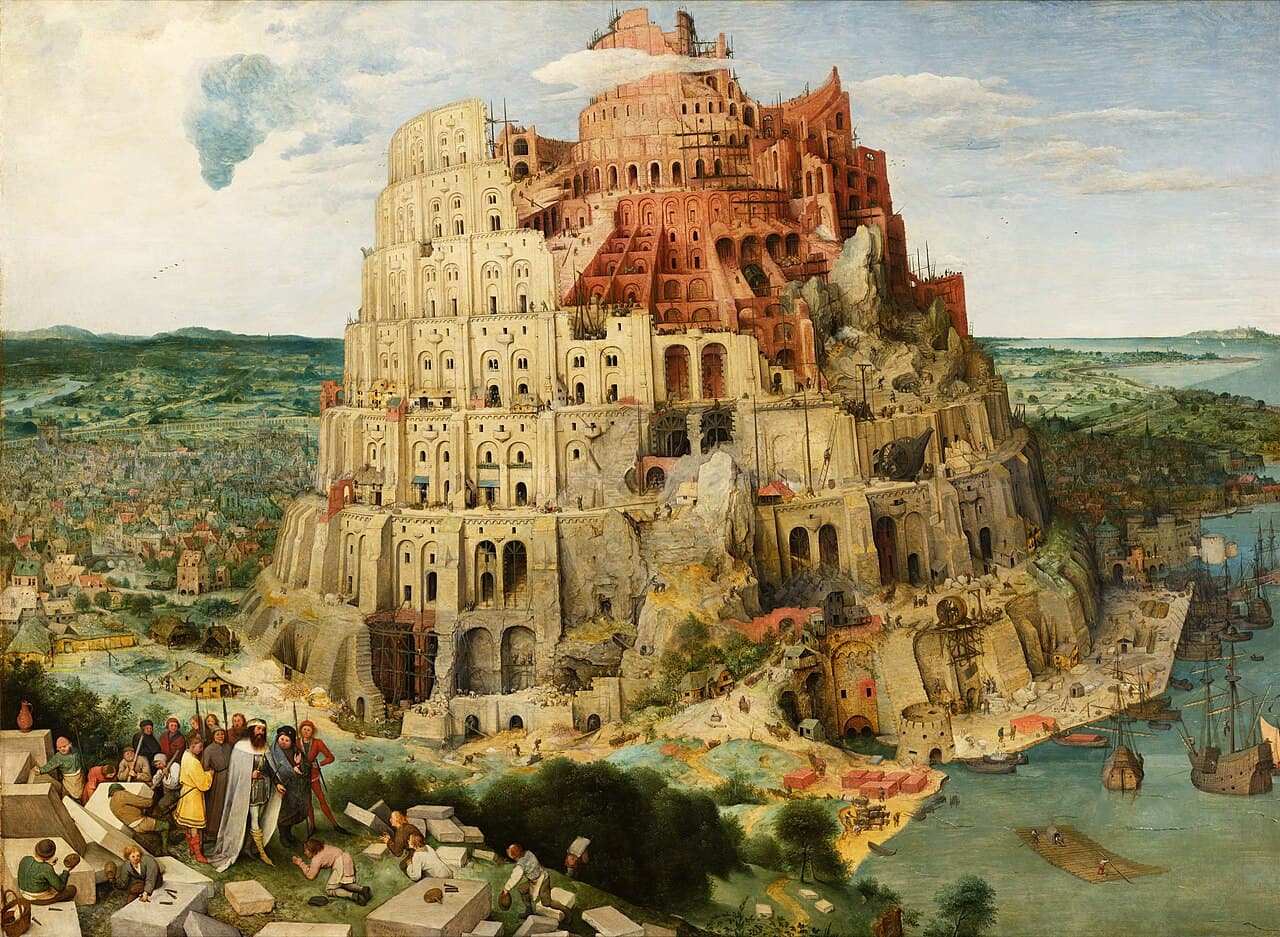
Pieter Bruegel the Elder · c. 1563
The Tower of Babel
A construction site the size of a mountain, painted with the obsessive detail of an engineer and the pessimism of a man who knew exactly how the story ends.
One of two surviving Babel paintings by Bruegel, this version dwarfs its Rotterdam counterpart in scale and ambition — cranes, scaffolding, and thousands of tiny figures climbing toward inevitable collapse.
Benvenuto Cellini · 1540–43
The Saliera
A saltcellar built like a mythological standoff — Neptune and a personification of Earth, balanced on an ebony base, made for a king who never really got to keep it.
Commissioned for Francis I of France, the gold-and-enamel Saliera later entered the Habsburg Kunstkammer, where it became infamous a second time: stolen in a 2003 heist and recovered in an Austrian forest three years later.
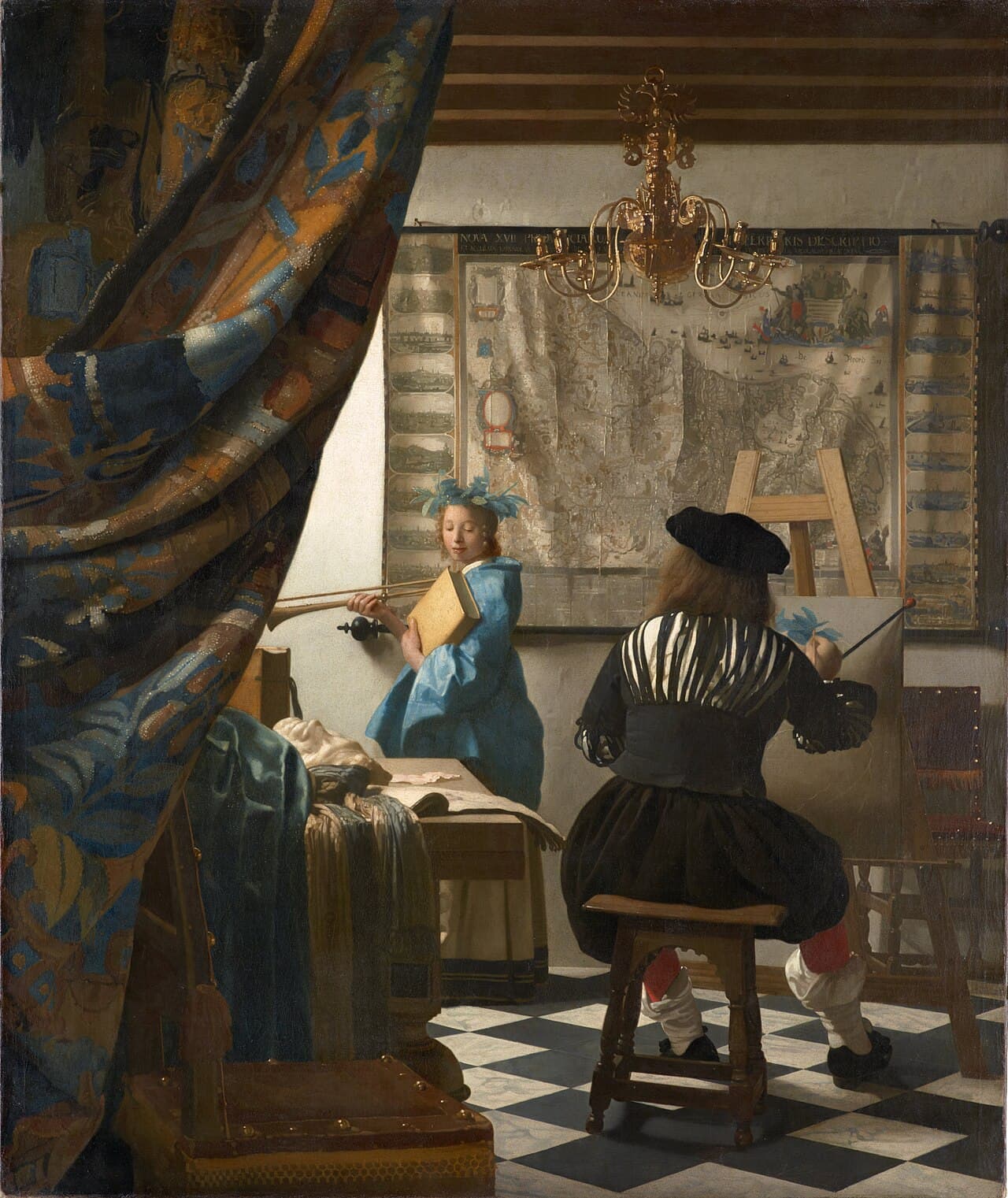
Johannes Vermeer · 1666–68
The Art of Painting
A painter, seen from behind, at work on a canvas we're not quite allowed to see — Vermeer's quiet argument for what his profession was worth.
One of only a few dozen paintings securely attributed to Vermeer, this canvas stayed in the artist's own studio until his death and is read today as a meditation on the art of painting itself, not a commissioned portrait.
How to explore with ELYIO
There's no single correct order through the Kunsthistorisches Museum, and the building doesn't really want you to find one — the grand staircase alone, painted in part by a young Gustav Klimt, is worth stopping for before you've seen a single gallery. ELYIO works the way people actually move through a museum: raise your phone at whatever has stopped you, and its recognition tells you what it can identify, right there, without breaking your pace to hunt for a wall label.
Self-guided visits
Because ELYIO's recognition in this museum is still expanding — this listing is part of a controlled preview — think of it as a companion for the things it can already identify, not a substitute for the museum's own labeling or a guarantee that every object in every case will be recognized on the first try. Coverage grows gallery by gallery.
Traditional audio guide vs. ELYIO
Traditional audio guide
Renting an audio guide device, returning it, and hoping the numbered stops matched what you actually wanted to see.
Squinting at a label in three languages for a painting hanging on the opposite wall.
Taking a photo to look up later, then never actually looking it up.
With ELYIO
Point your phone at what caught your eye — no headset, no numbered stops, no rented device.
Get what ELYIO's recognition can identify, in plain language, on the spot.
Keep moving your own way through the galleries, in whatever order the building pulls you.
The museum sits on Maria-Theresien-Platz, on Vienna's Ring Road, directly across from the Natural History Museum — the two buildings were designed as a matching pair. It's a walkable distance from the Hofburg, and the museum's Kunstkammer, Picture Gallery, and antiquities collections are spread across two main floors beneath the central dome, so budget time for stairs — the grand staircase itself is part of the collection. Photography without flash is typically permitted in the permanent galleries, though individual rooms may post their own restrictions — follow on-site signage.
Frequently asked questions
Does ELYIO work inside the Kunsthistorisches Museum?
Yes — the museum is in ELYIO's database, and recognition for it is currently in a controlled preview. Point your camera at a painting or object and ELYIO's AI will identify what it currently can; coverage is expanding, not yet exhaustive.
Is ELYIO officially partnered with the Kunsthistorisches Museum?
No. ELYIO is an independent recognition app and isn't affiliated with, endorsed by, or operated in partnership with the Kunsthistorisches Museum or its staff.
Will ELYIO recognize every painting I photograph?
Not yet, and we don't want to overpromise: with a collection this large, ELYIO's AI identifies what it currently recognizes and is honest when something falls outside what it can confirm, rather than guessing.
Do I need to follow a specific route for ELYIO to work?
No fixed route. ELYIO is built to work with however you naturally move through the galleries — there's no numbered tour to follow and no requirement to see things in order.
Does ELYIO replace the museum's own labels and guides?
It's a companion, not a replacement. Museum labels, guided tours, and official audio guides remain the most complete source of curatorial detail; ELYIO adds fast, camera-first recognition on top of that.