The Gallery That Taught Europe How to Look at Paintings
Leo von Klenze built the Alte Pinakothek in 1836 to house the Wittelsbach dynasty's Old Masters — and it became the model for grand museums from St. Petersburg to Rome. Point your camera at a canvas and let ELYIO tell you what it's found.
Eight hundred-plus paintings hang across two floors of skylit halls — a fur-collared self-portrait beside a six-metre vision of the apocalypse, with no obvious order to explain why either matters.
Museum labels give you a name and a date. They don't tell you that the painter across the room considered his own face too sacred to sign lightly, or why one gallery took forty years to rebuild after the war.
What to see
The Alte Pinakothek isn't organized as a single walk — its wings loop by school and century, German panels giving way to Flemish altarpieces, Italian Renaissance rooms opening onto Dutch interiors. Four things worth losing time over:
The German Renaissance Rooms
The world's most complete gathering of Old German masters — Dürer, Cranach, Altdorfer, Grünewald — much of it acquired by King Ludwig I in a single stroke, the 1827 purchase of the Boisserée collection.
The Rubens Hall
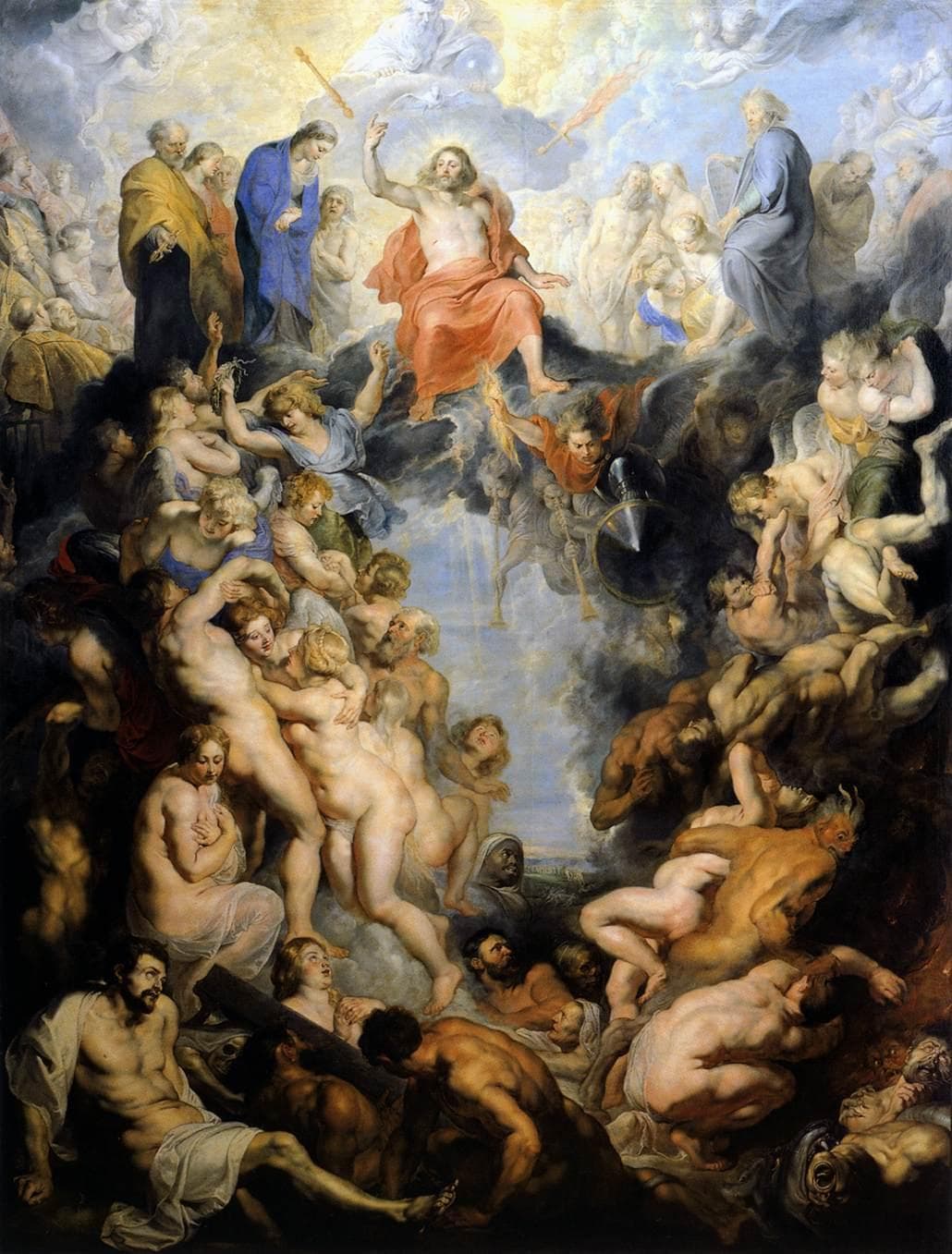
A room built around one painting: Rubens's Great Last Judgement, still hanging exactly where it was hung when the museum opened in 1836. The surrounding galleries hold 72 further Rubens canvases — the largest concentration of his work anywhere.
Early Netherlandish Painting
Van Eyck, van der Weyden, Bosch, Memling — a run of 15th-century panels so fine-grained they reward standing closer than feels polite.
The Italian Galleries
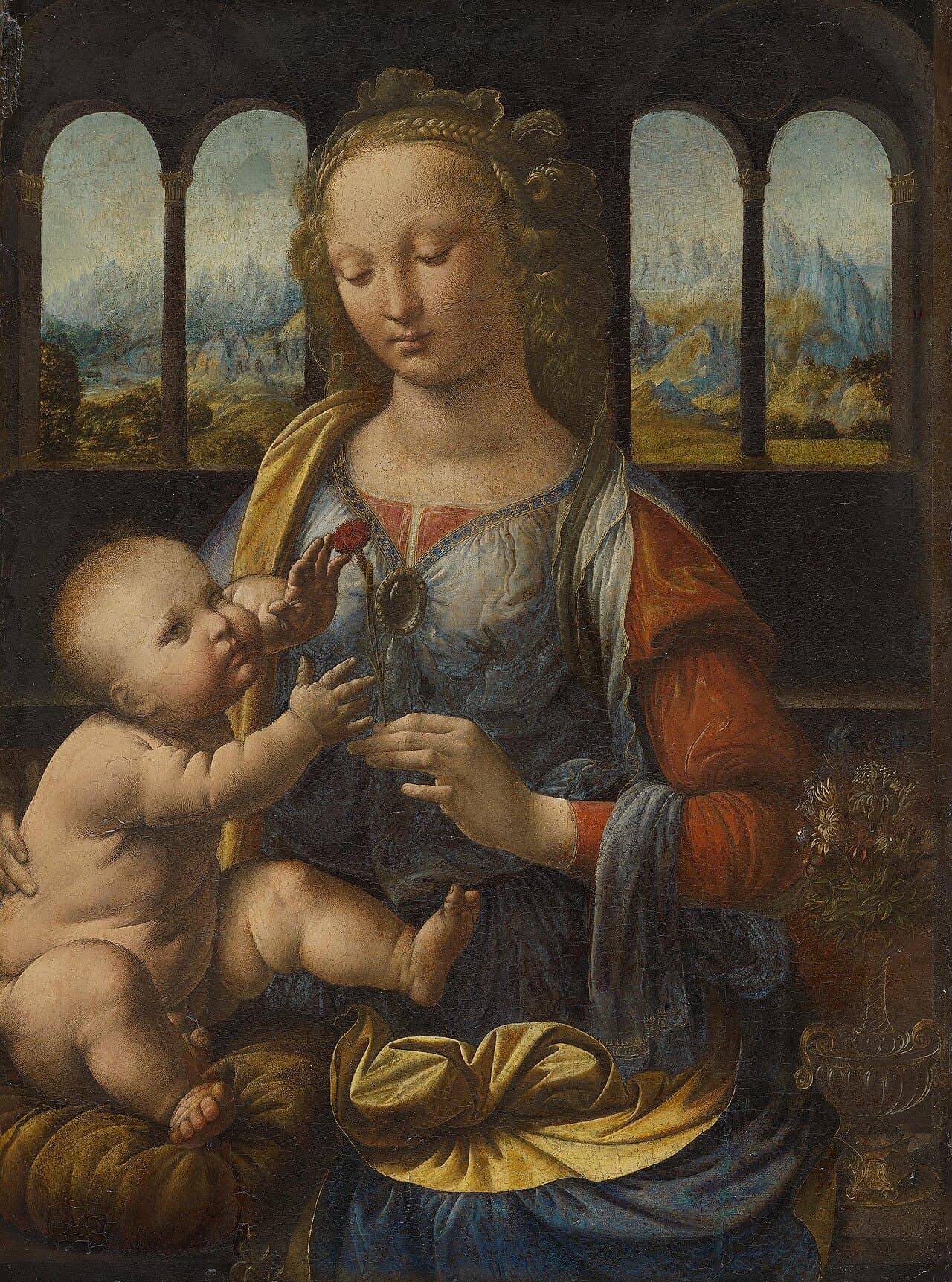
Botticelli, Raphael, Titian, and a small, quiet Leonardo — the Madonna of the Carnation — bought by the museum's directors decades after Ludwig I's original collection was formed.
Masterpiece stories
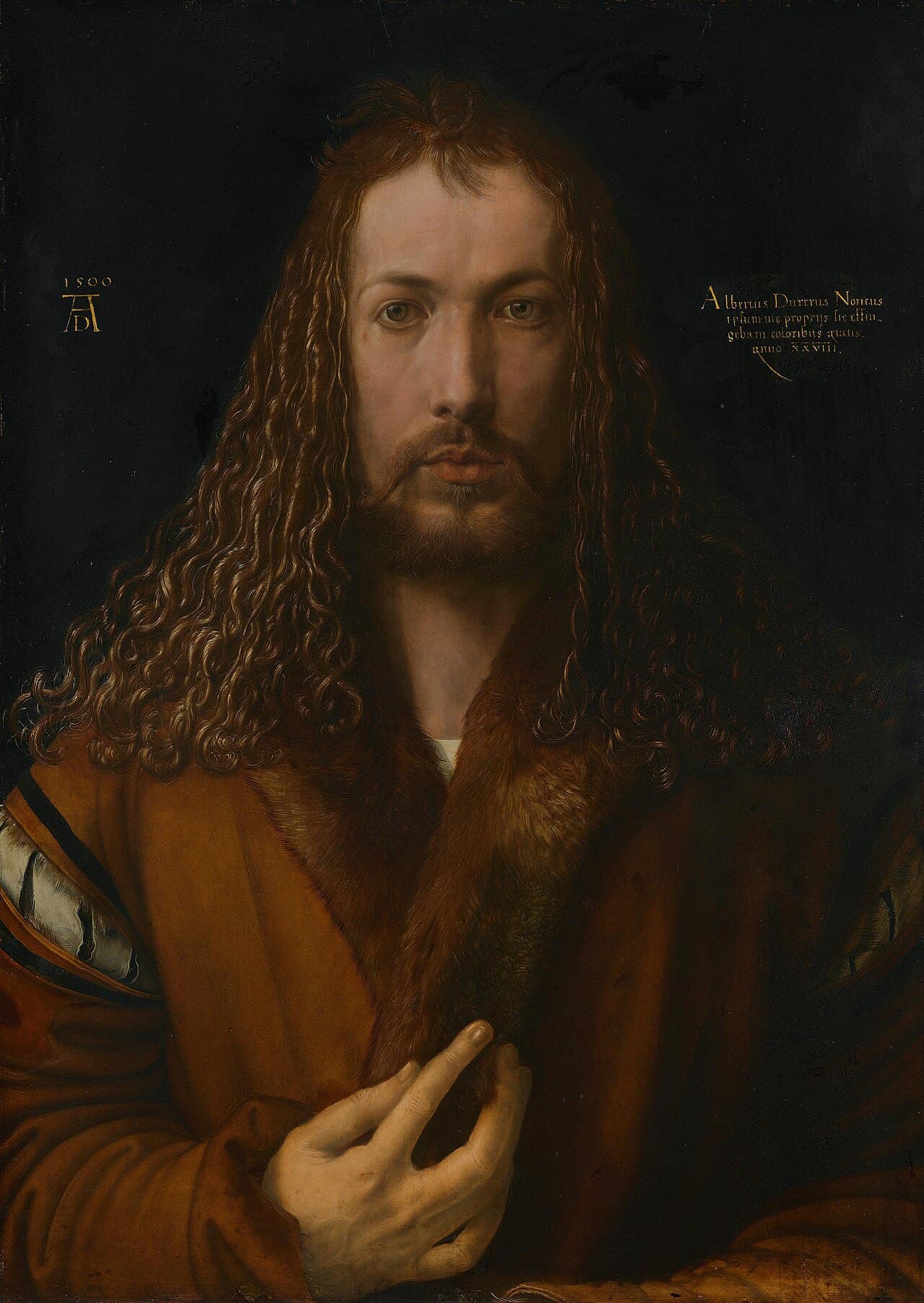
Albrecht Dürer · 1500
Self-Portrait in a Fur-Collared Robe
A 28-year-old painter stares out of the frame with the frontal gaze and blessing hand of Christ — a claim about art that almost nobody in 1500 had the nerve to make.
Dürer's last and most confrontational self-portrait breaks every rule of secular portraiture in its day, borrowing directly from images of Christ as Salvator Mundi. It hung on public view in Nuremberg for nearly three centuries before the Bavarian royal collection bought it in 1805.
Peter Paul Rubens · 1617
The Great Last Judgement
At just over six metres tall, it's the largest painting in the building — and the only one that has never left the spot where the museum's founders first hung it.
Commissioned for a Jesuit church on the eve of the Thirty Years' War, the altarpiece proved too explicit in its nudity for its original setting before entering the Bavarian collection via Düsseldorf. The Alte Pinakothek's largest hall was designed specifically around it.
Leonardo da Vinci · c. 1478–80
Madonna of the Carnation (Virgin and Child)
A small, early Leonardo, painted before he'd left Florence for Milan — easy to walk past, hard to forget once you've stopped.
Acquired in the late 19th century under director Hugo von Tschudi, long after Ludwig I's founding purchases, it fills one of the gaps the Wittelsbach collectors had left in early Italian Renaissance painting.
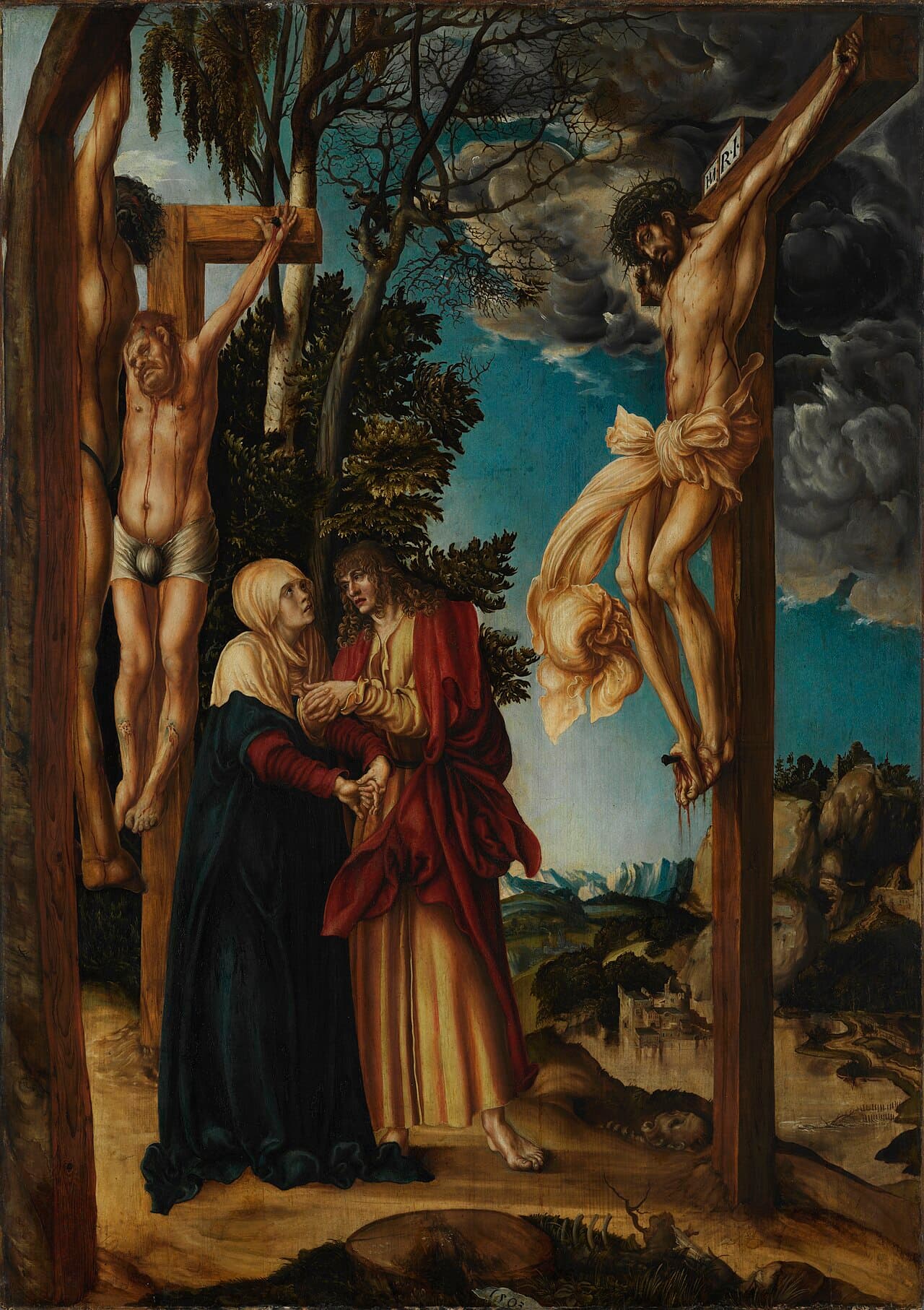
Lucas Cranach the Elder · early 16th century
Lamentation Beneath the Cross
Cranach paints the aftermath of Golgotha the way he paints everything — with an eye for costume and a strange, cool calm where you'd expect anguish.
One of many German panels that entered Bavarian royal hands through secularization and Ludwig I's collecting campaigns of the 1820s — part of what makes the Alte Pinakothek's German rooms the most complete such holding in the world.
How to explore with ELYIO
There's no fixed route through the Alte Pinakothek — the galleries loop by school and century across two skylit floors, and most visitors double back at least once. That's where a camera helps more than a map: point it at whatever's in front of you, and ELYIO's recognition works from what it sees, not from a printed number on a wall. The Alte Pinakothek is part of ELYIO's controlled preview — the museum is in our database, but public recognition here isn't fully unlocked yet. When it is, you'll be able to scan freely across all the wings; for now, treat any early results as a first look at what's coming.
Self-guided visits
Give yourself at least two unhurried hours — longer if the German Renaissance rooms or the Rubens Hall catch you, which they usually do. Old Master rooms reward slow looking rather than checklist-crossing: sit with the Dürer for a minute before moving on, and don't rush past the smaller Netherlandish panels near the entrance to the German galleries. ELYIO is not affiliated with the Bavarian State Painting Collections; it's simply a way to look more closely at what you're already standing in front of.
Traditional audio guide vs. ELYIO
Traditional audio guide
Squint at a wall label in low gallery light, hoping the title matches what you're looking at.
Backtrack through the audio guide's numbered stops trying to find the one that matches the painting in front of you.
Leave uncertain which Rubens is the famous one and which fur-collared self-portrait is the famous Dürer.
With ELYIO
Point your camera at the canvas — no stop number to hunt for.
Get what ELYIO's AI recognizes about the painting in front of you, right there.
Save what you've found and keep moving through the next gallery.
The Alte Pinakothek occupies Leo von Klenze's original 1836 building, still lit by the skylights he designed into the upper-floor halls — one reason paintings here read differently depending on the hour and the weather outside. The floor plan loops rather than runs in a straight line: German and Netherlandish rooms cluster on one side, Italian, French, and Spanish schools on the other, with the Rubens Hall anchoring the center. Bring comfortable shoes; the building is long, and the collection rewards walking its full length more than once.
Frequently asked questions
Is ELYIO officially connected to the Alte Pinakothek or the Bavarian State Painting Collections?
No. ELYIO is an independent camera-based recognition app; it isn't affiliated with, endorsed by, or operated in partnership with the museum or the Bavarian State Painting Collections.
Can I use ELYIO to identify every painting in the museum?
Not yet everywhere. The Alte Pinakothek is in ELYIO's database as a controlled preview, meaning public recognition is still being rolled out. Point your camera at a work and ELYIO's AI will identify what it currently can — coverage will expand over time.
Is there a set order to visit the galleries?
No — the Alte Pinakothek doesn't have a single official route. Its wings loop by period and school, so most visitors move back and forth between rooms rather than following one path from start to finish.
What's the single most famous painting here?
Most visitors head first for Dürer's 1500 self-portrait or Rubens's Great Last Judgement in the Rubens Hall — but with 800-plus works from six centuries on the walls, 'most famous' depends on who you ask.
Do I need to know art history to enjoy a visit?
No. The paintings carry plenty on their own — a face rendered like Christ's, a six-metre vision of judgment day. ELYIO is there to add context when you want it, not to test you on it.