Egyptian bronzes, a scarred and unrestored cast of The Thinker, a Caravaggio, a van Gogh — all under one glass-roofed atrium, with no admission fee and no line at the door.
The Cleveland Museum of Art holds more than 66,000 works across sixteen departments — far too much for a single wall label, or a single visit, to explain.
Because entry is free and there's no ticket desk pacing you, it's easy to drift past a Caravaggio or an ancient bronze without ever learning what stopped you in front of it.
What to see
The CMA isn't laid out as a single loop — it's a campus of collections you can enter from almost any door. These are the wings worth carving out time for.
Egyptian & Ancient Near Eastern Galleries
Ground-floor rooms in the original 1916 building holding coffins, reliefs, and stelae from a collection that punches well above the museum's mid-size-city status.
Asian Art Wing
Chinese, Japanese, Korean, and South and Southeast Asian holdings that specialists routinely rank among the strongest in the country — Buddhist sculpture, scroll painting, and ceramics in equal depth.
European Old Masters to Impressionism
A walk from Caravaggio and Zurbarán through Poussin and Rubens into Monet, Renoir, and van Gogh, without ever leaving one continuous run of galleries.
Armor Court
A single dramatic hall of European and Japanese arms and armor — one of the most photographed rooms in the museum, and one of the least explained.
Masterpiece stories
Auguste Rodin · 1917 cast
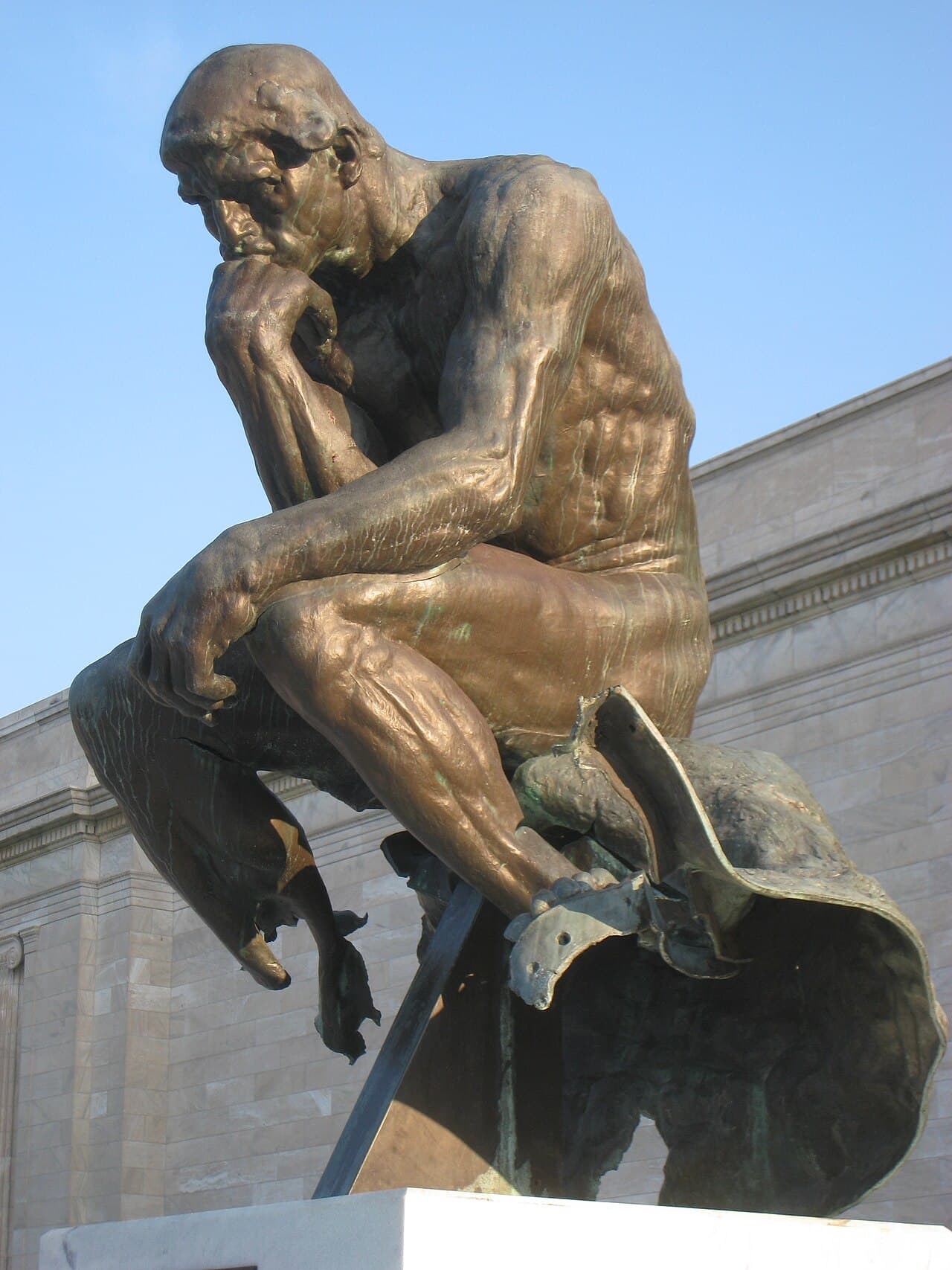
The Thinker
The most famous sculpture in Cleveland — and the only cast of The Thinker still standing with the damage from a 1970 bombing left visibly unrepaired.
Installed on the museum's front steps since 1917, this bronze was partially destroyed by an explosive device, widely attributed to a radical group, in 1970. Rather than restore it, the museum chose to preserve the scars — making this cast, of more than twenty made in Rodin's lifetime, structurally and historically unique.
Vincent van Gogh · 1889
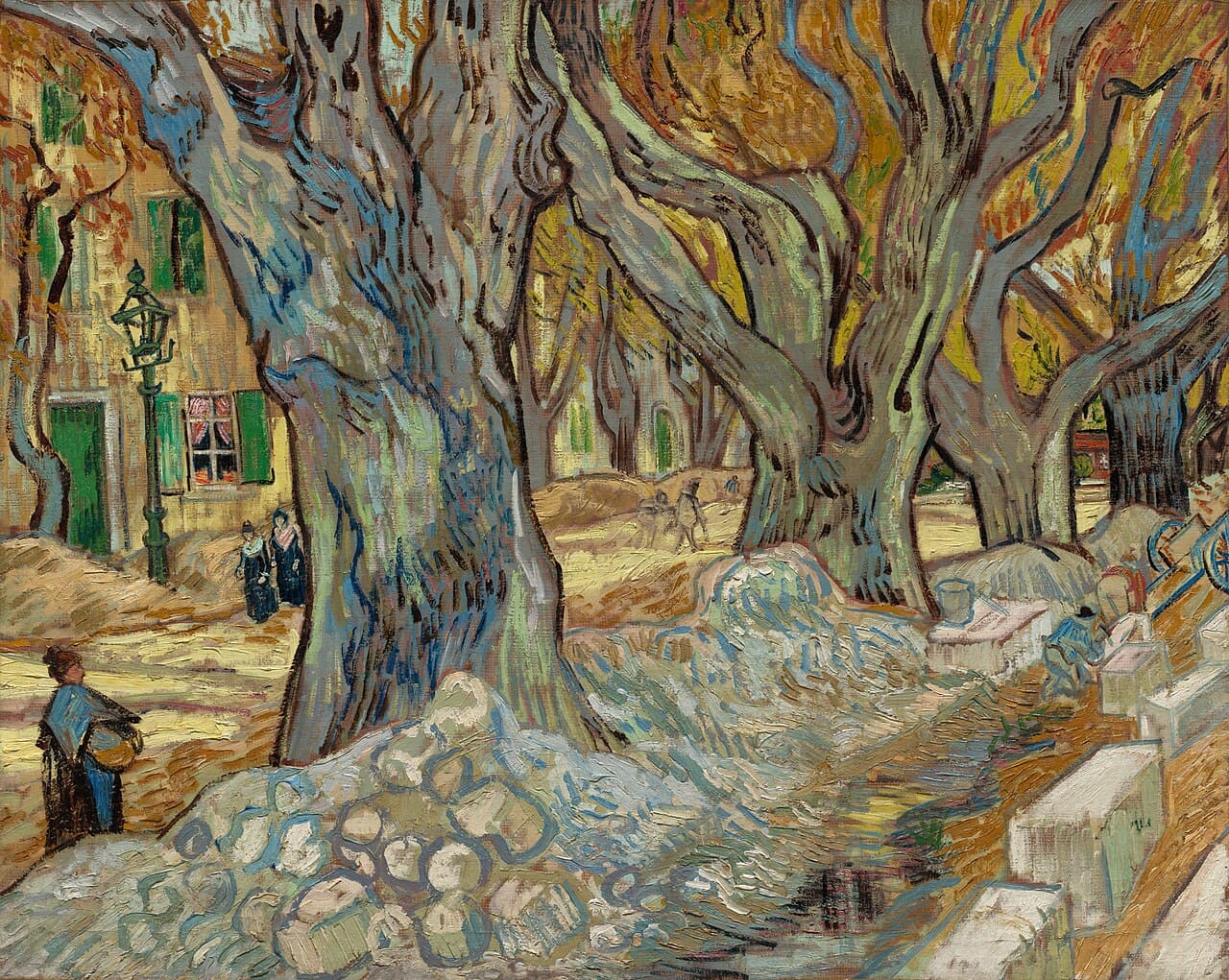
The Large Plane Trees (Road Menders at Saint-Rémy)
Painted during van Gogh's stay at the Saint-Rémy asylum, in the loaded, rhythmic brushwork that has since become shorthand for his entire late career.
One of the anchor works in the CMA's Modern European Painting and Sculpture collection, acquired in 1947 and rarely absent from any list of the museum's essential holdings.
Caravaggio · c. 1607
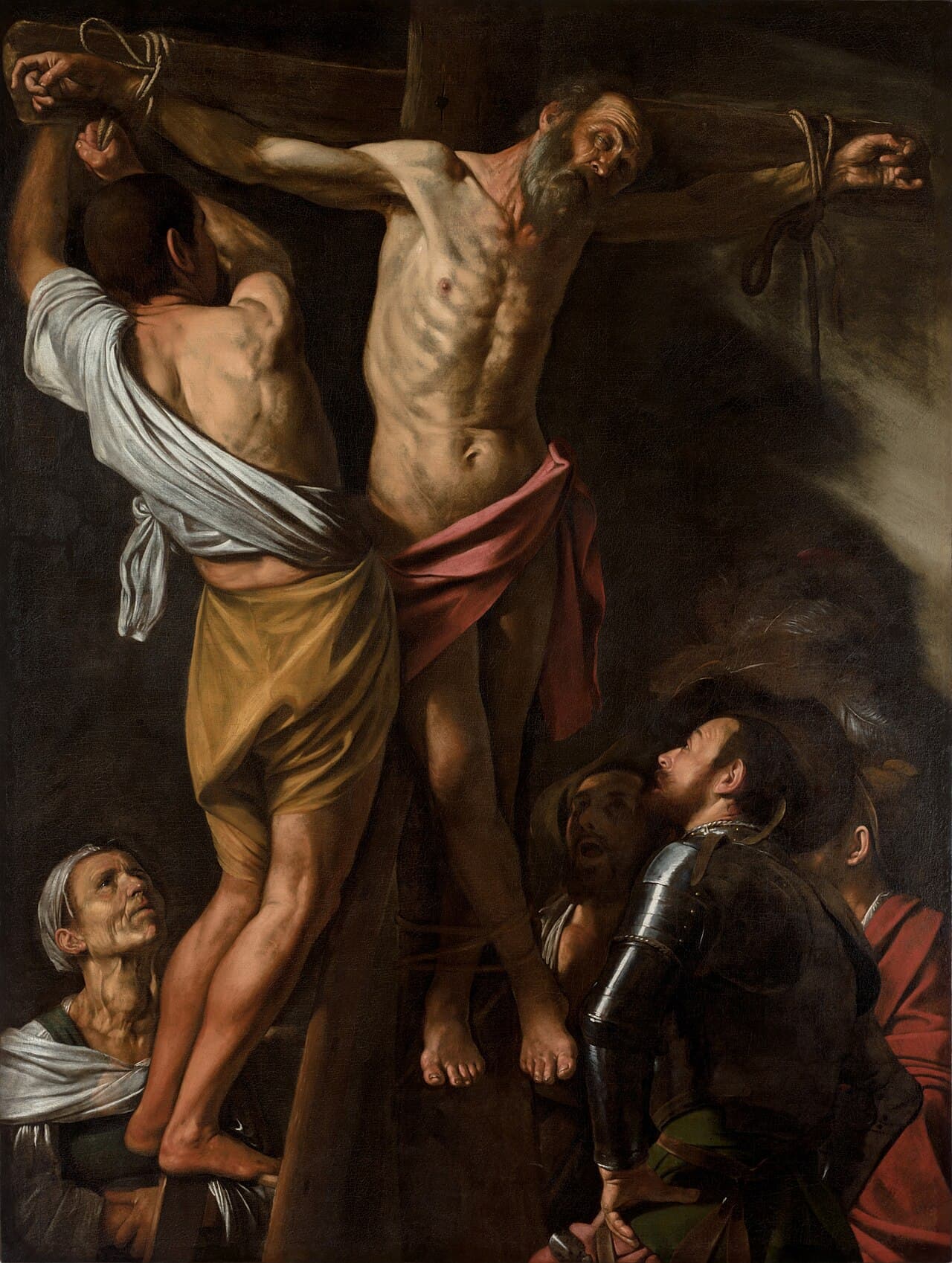
The Crucifixion of Saint Andrew
A rare Caravaggio to have left Italy at all, its dramatic single-source lighting authenticated and firmly attributed only in the 1970s.
Painted during Caravaggio's Naples period, the canvas depicts the apostle Andrew's final moments and anchors the museum's Italian Baroque holdings.
Frederic Edwin Church · 1860
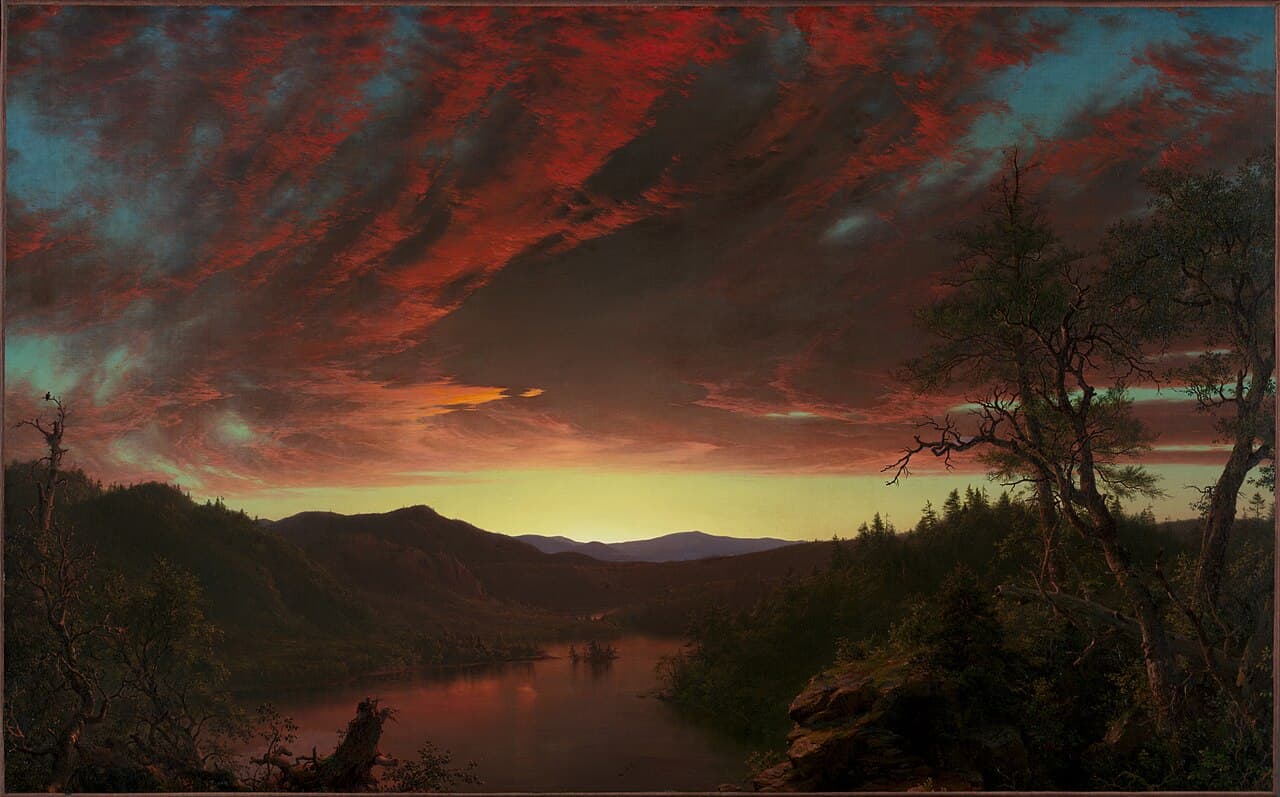
Twilight in the Wilderness
A blazing, almost unpeopled sunset that contemporaries read as a meditation on a country sliding toward civil war.
A centerpiece of the Hudson River School and one of the strongest single works in the CMA's American Painting and Sculpture collection.
How to explore with ELYIO
There's no single correct route through the CMA — the 2012 glass atrium designed by Rafael Viñoly sits at the center of the building precisely so visitors can drop into any wing and cut back through when they're done. Start wherever pulls you in first; the architecture is built to let you wander.
Self-guided visits
Skip trying to memorize gallery numbers in advance. Walk the collection the way the building was designed to be walked — atrium first, then whichever wing catches your eye — and use your phone to fill in context as you go, rather than a printed map to plan a route before you've seen anything.
Traditional audio guide vs. ELYIO
Traditional audio guide
A scheduled highlights tour covers a fixed set of works on a fixed path, at a fixed time
Audio-guide numbers only match a pre-selected checklist, not whatever happens to be on the wall in front of you
A paper gallery map shows you where the wings are, not what's actually installed in them this month
With ELYIO
Point your camera at whatever stops you, in any wing, in any order — no schedule required
ELYIO's AI recognition works from what's actually in front of the lens, including pieces outside any preset highlights list
No headset, no ticket desk for a tour, no queue — just walk and look
General admission to the CMA's permanent collection galleries has been free since the museum opened in 1916; some special exhibitions are ticketed separately. The museum sits in the University Circle district on Cleveland's east side, within walking distance of several other cultural institutions. The building itself is a layered history lesson: the original 1916 Beaux-Arts structure, Marcel Breuer's 1971 modernist wing, and the 2012 Rafael Viñoly renovation that enclosed the courtyard under a glass roof and added the east and west wings.
Frequently asked questions
Is the Cleveland Museum of Art actually free to visit?
Yes — general admission to the permanent collection has been free since the museum opened, and that hasn't changed. Some ticketed temporary exhibitions are the exception, not the rule.
Does ELYIO recognize everything on display at the CMA?
Not yet everything, and we won't pretend otherwise. The Cleveland Museum of Art is in ELYIO's database and camera recognition is active here, but with a collection this large, coverage keeps expanding rather than starting complete. Point your camera at a work and our AI recognition identifies what it can.
Is ELYIO officially partnered with the Cleveland Museum of Art?
No. ELYIO is an independent camera-recognition app, not an official museum partner, app, or endorsed guide. We simply help visitors identify artworks they photograph.
Does ELYIO give you a set tour route to follow at the CMA?
No — the museum isn't built around one numbered route, and neither is ELYIO. Wander through whichever wing draws you in and use your camera as you go.
What's the best way to use ELYIO inside the museum?
Keep your camera ready as you walk. When something stops you — a painting, a sculpture, an object in a case — point and let ELYIO's AI recognition tell you what it can, then keep moving at your own pace.