New Haven's Free Encyclopedic Art Museum, From Babylon to Basquiat
Inside Louis Kahn's landmark building, the Yale University Art Gallery holds more than 300,000 objects spanning six millennia — and it has never charged admission.
The Gallery's encyclopedic range puts Etruscan bronzes, Congolese sculpture, and Rothko canvases a few minutes' walk apart, with no obligatory route between them.
As a teaching museum first, wall text is written with Yale students in mind, which can leave casual visitors wanting faster, plain-language context.
Four interconnected buildings and no ticketed entry point mean first-time visitors often aren't sure where to start or what they're standing in front of.
What to see
The collection is genuinely encyclopedic — this isn't a themed museum, so a first visit benefits from knowing roughly what's where.
Ancient Art
More than 13,000 objects from the Near East, Egypt, Greece, Etruria, and Rome, spanning the Neolithic to the early Byzantine era, including material from Dura-Europos in Syria.
American Paintings & Sculpture
One of the Gallery's founding strengths: John Trumbull's Revolutionary War paintings, plus Copley, Bierstadt, Homer, Hopper, and colonial-to-mid-century sculpture.
Modern & Contemporary Art
Picasso, Miró, Rothko, and Lichtenstein inside Kahn's raw-concrete galleries, with a rooftop sculpture garden and large-scale contemporary work by artists like El Anatsui.
Arts of Africa, Asia & the Ancient Americas
Over 1,000 African sculptural objects, thousands of Asian works from ukiyo-e prints to contemporary ceramics, and Maya and Olmec figures from the ancient Americas.
Masterpiece stories
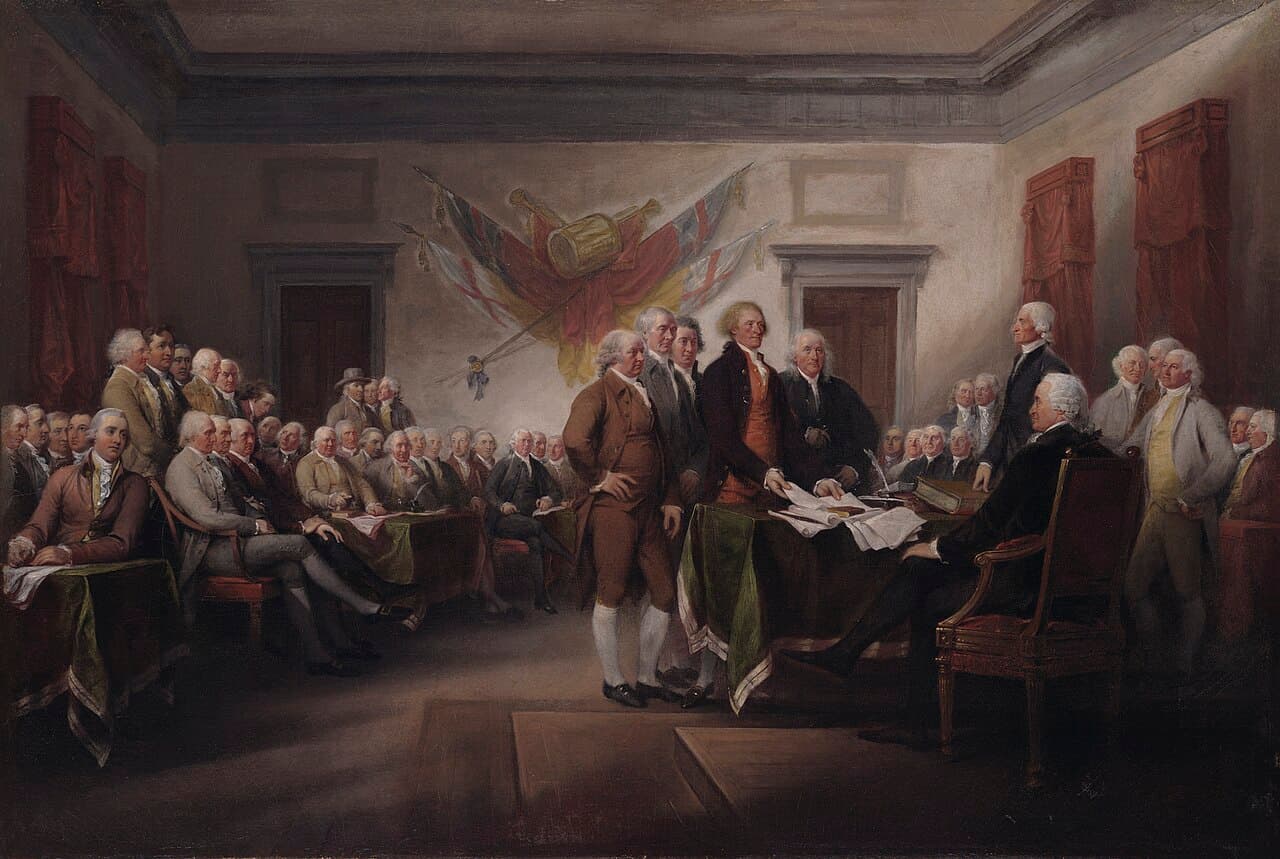
John Trumbull · 1786–c.1820
The Declaration of Independence, July 4, 1776
One of the most reproduced images of American history was painted by a Yale-connected artist whose donation founded this very Gallery.
Trumbull's small study for his famous Rotunda composition anchors the Gallery's American collection and its own 1832 origin story.
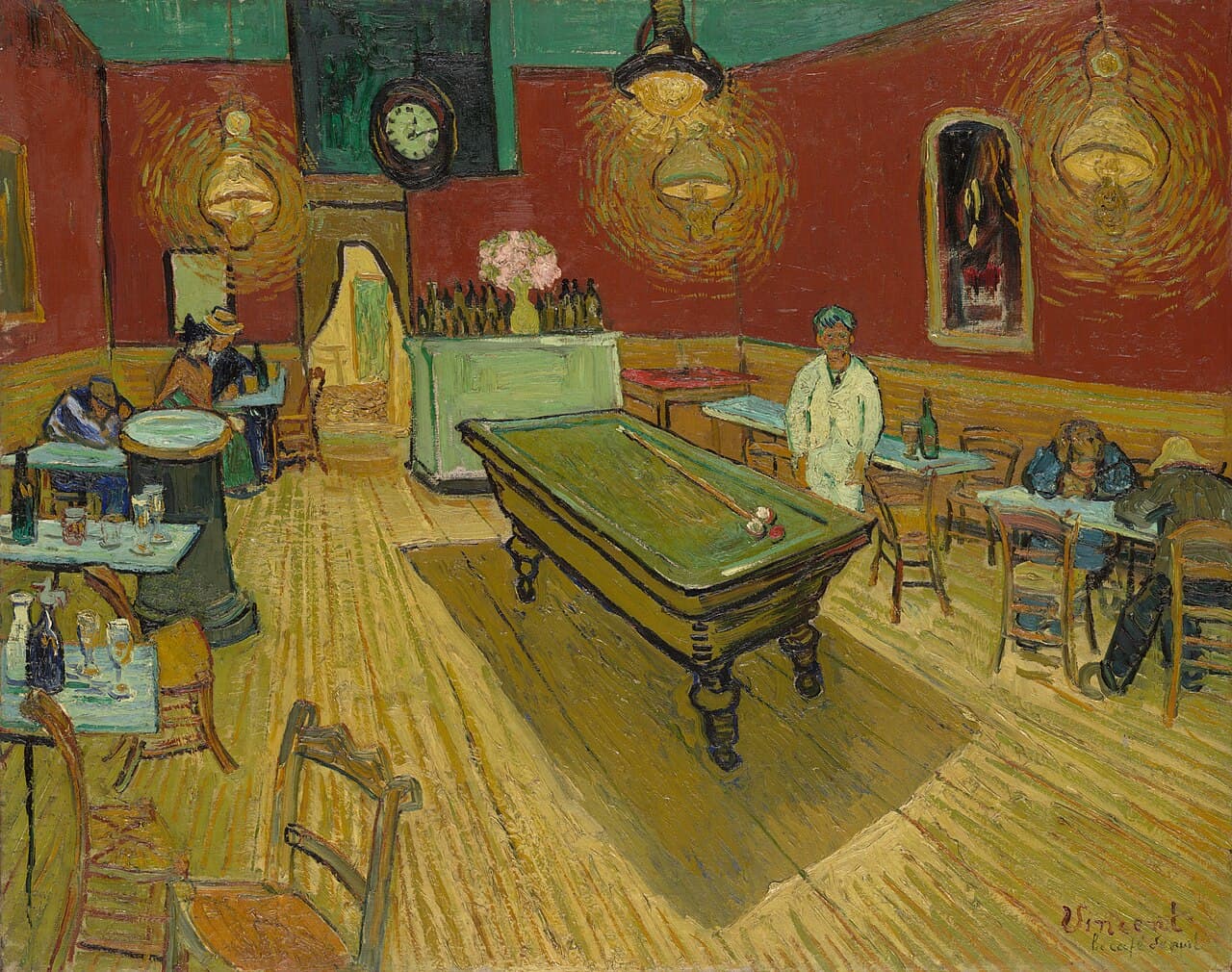
Vincent van Gogh · 1888
Le café de nuit (The Night Café)
A tilted billiard table, a red-and-green interior meant to feel unsettling — Van Gogh called this one of his 'ugliest' pictures, and one of his most important.
Painted in Arles and now one of the most recognizable Post-Impressionist works outside a European or major U.S. metropolitan collection.
Photograph: Sgconlaw, via Wikimedia Commons (CC BY-SA 3.0)
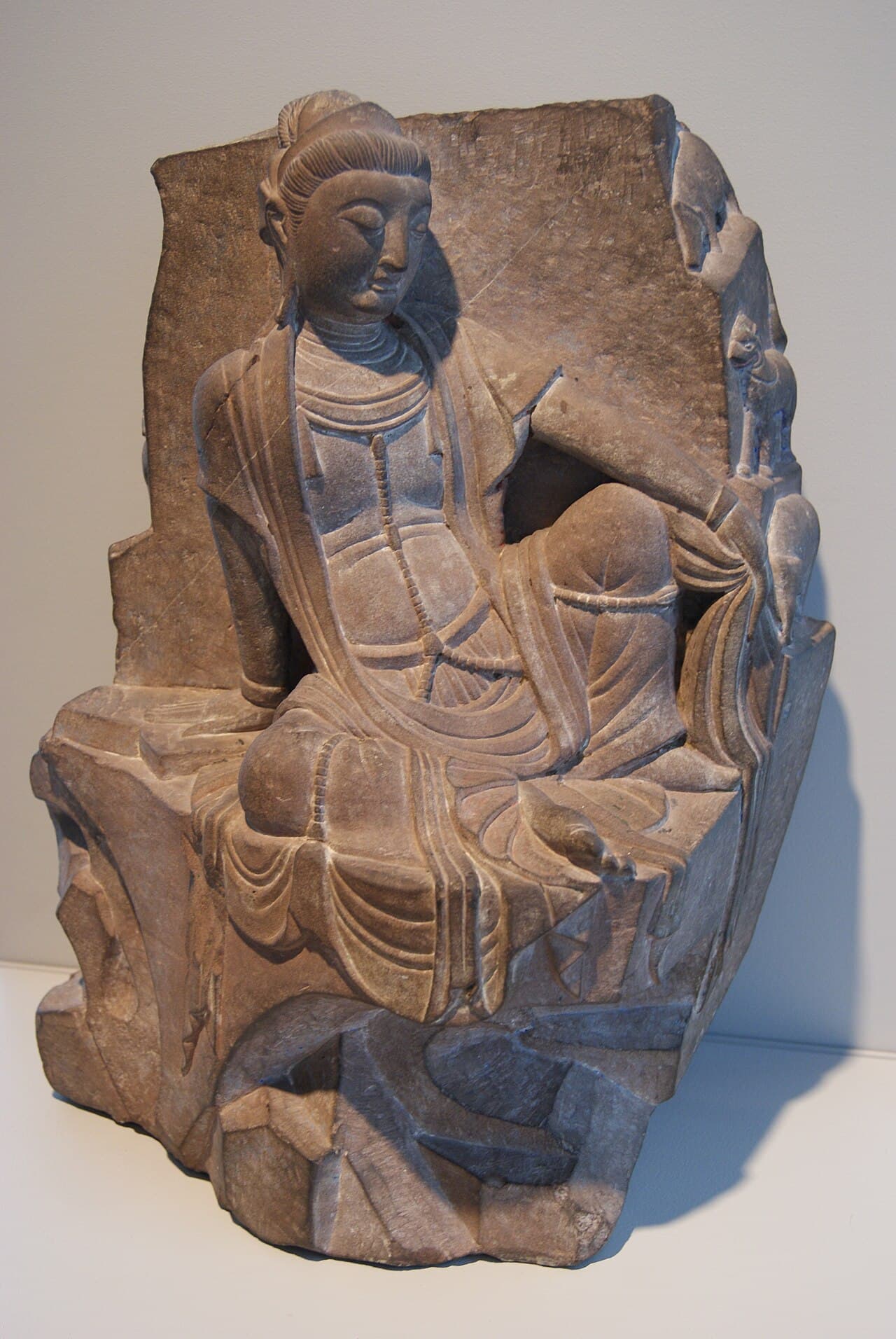
Unknown artist, China · dynastic China
Bodhisattva Avalokiteshvara in the Water-Moon Manifestation (Shuiyue Guanyin)
A large, serene devotional figure seated in 'royal ease,' representing one of East Asian Buddhism's most enduring images of compassion.
Part of the Gallery's Asian art holdings, which range from early sculpture to ukiyo-e prints and contemporary ceramics.
How to explore with ELYIO
Open ELYIO's scanner at elyio.co/visit and point your camera at any work that catches your eye — in the Kahn galleries, in Street Hall, or in the ancient sculpture court. ELYIO doesn't have a Yale-specific curated catalog yet, so it's using its general AI art recognition, which tends to do best on widely reproduced, well-documented works. Treat any match as a helpful starting point rather than an official museum label, and read the Gallery's own wall text alongside it.
Self-guided visits
Because there's no single 'correct' route through four connected buildings, a self-guided visit works well here: pick one collecting area per visit rather than trying to see all 300,000 objects at once, and let curiosity — plus your phone's camera — set the pace.
Traditional audio guide vs. ELYIO
Traditional audio guide
Time your visit to one of the limited weekly Gallery Guide or docent tours to get any spoken context at all.
Flip between a paper map and small object labels across four connected buildings and multiple floors.
Walk past unfamiliar loans and study-storage cases with no easy way to learn more on the spot.
With ELYIO
Point your phone whenever something catches your eye, on your own schedule, without waiting for a scheduled tour.
Get a quick, general AI read on an artwork without breaking your pace through the galleries.
Carry the same camera-first habit into every other museum you visit, not just one institution's own app.
General admission is always free at the Yale University Art Gallery. The main entrance is at 1111 Chapel Street, between York and High Streets; an elevator opposite the entrance provides accessible access to all floors. Large bags, backpacks, food, and drink aren't permitted in the galleries, though limited lockers are available. There's no on-site café, but the surrounding Chapel Street and Broadway district has plenty of options nearby. The Gallery is a member of the North American Reciprocal Museums program.
Frequently asked questions
Is the Yale University Art Gallery free to visit?
Yes. General admission has always been free — there's no ticket to buy or reserve for regular visits.
Is this the same as the Yale Center for British Art?
No. They're separate Yale museums: the Yale University Art Gallery is encyclopedic, while the Center for British Art focuses specifically on British art.
Can I take photos inside the galleries?
Personal photography without flash is generally permitted in the permanent-collection galleries, though some loaned works carry their own restrictions — check on-site signage for specifics.
Does ELYIO have a special catalog for Yale's collection?
Not yet. ELYIO doesn't have institution-specific data for the Yale University Art Gallery, so it uses its general AI art recognition here, which works best on well-known, widely reproduced pieces rather than every object on view.
How much time should I plan for a visit?
More than you'd expect for a 'small' university museum — the collection spans four connected buildings, so budget time to move between wings rather than rushing a single floor.