A Hill Above Los Angeles, Built Entirely Around Looking.
The Getty Center is as much Richard Meier's architecture and Robert Irwin's garden as it is Van Gogh and centuries of European painting. Point your camera anywhere along the way, and let ELYIO surface what it recognizes.
You arrive by tram, climb travertine stairs into a rotunda, and step out onto a terrace facing five pavilions, a research library, and a garden that its own artist called 'a sculpture in the form of a garden' — with no single door that says where to start.
Labels identify what's directly in front of you. They don't explain why a three-foot Dutch panel painting once smashed the world auction record for an Old Master, or what you're actually looking at in a gallery you wandered into by accident.
What to see
The Getty Center rewards wandering more than most museums — the collection is deliberately compact, and the building and grounds are half the reason people come back. These are the four things most visitors end up circling.
European Paintings
Four pavilions arranged roughly chronologically, from early Renaissance panels to Impressionism, with skylit upper galleries that shift with the day's actual sunlight.
Illuminated Manuscripts
One of the finest collections of medieval and Renaissance manuscripts outside Europe, built around a trove the Getty acquired from a struggling German collection in 1983 — pages small enough to miss and detailed enough to stop you cold.
The Central Garden
Robert Irwin's 134,000-square-foot garden folds a stream, a stone waterfall, and a floating maze of azaleas into the walk between galleries — planted to look different on every visit.
Richard Meier's Architecture
Two competing grids, a fountain-filled arrival plaza, and views that stretch from the San Gabriel Mountains to the Pacific on a clear day — the campus is a destination independent of anything hanging on its walls.
Masterpiece stories
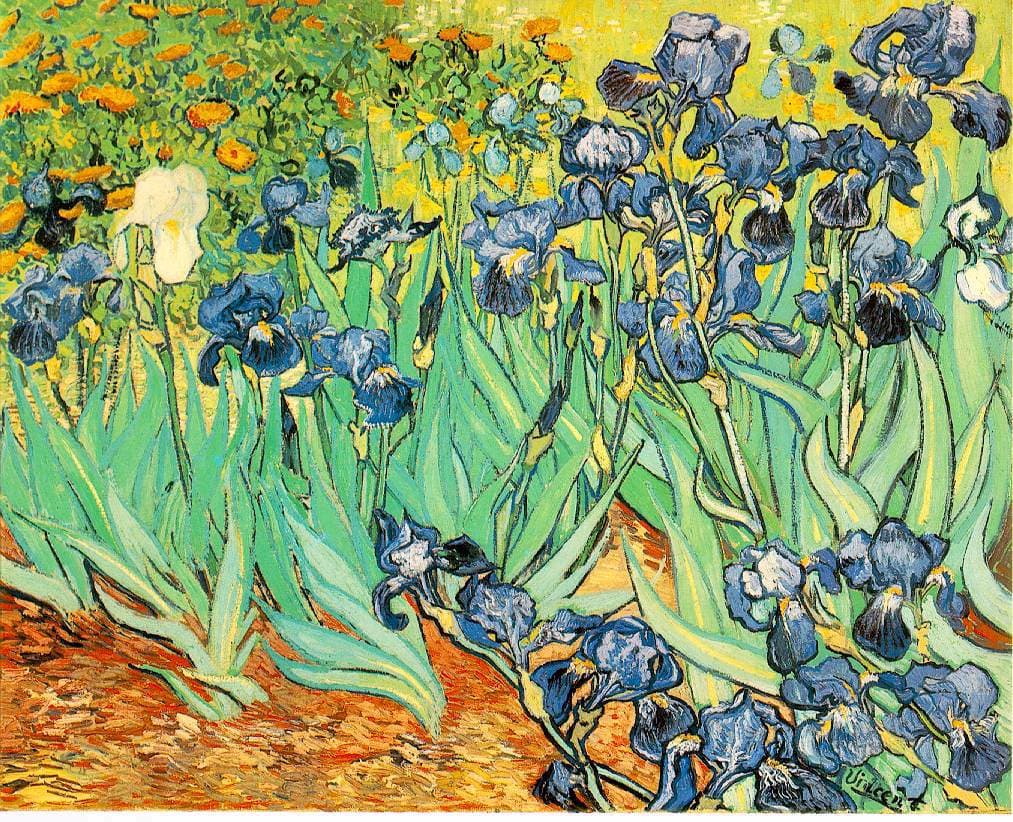
Vincent van Gogh · 1889
Irises
Painted the week Van Gogh entered the asylum at Saint-Rémy, and one of the works that turned a private sale into a headline: it sold for a then-record $53.9 million in 1987, three years before the Getty acquired it.
Van Gogh described the painting as a 'lightning conductor for his illness,' working from the asylum garden with a calm, controlled palette unusual for that period of his life. It's one of the single most recognized works in the Getty's collection.
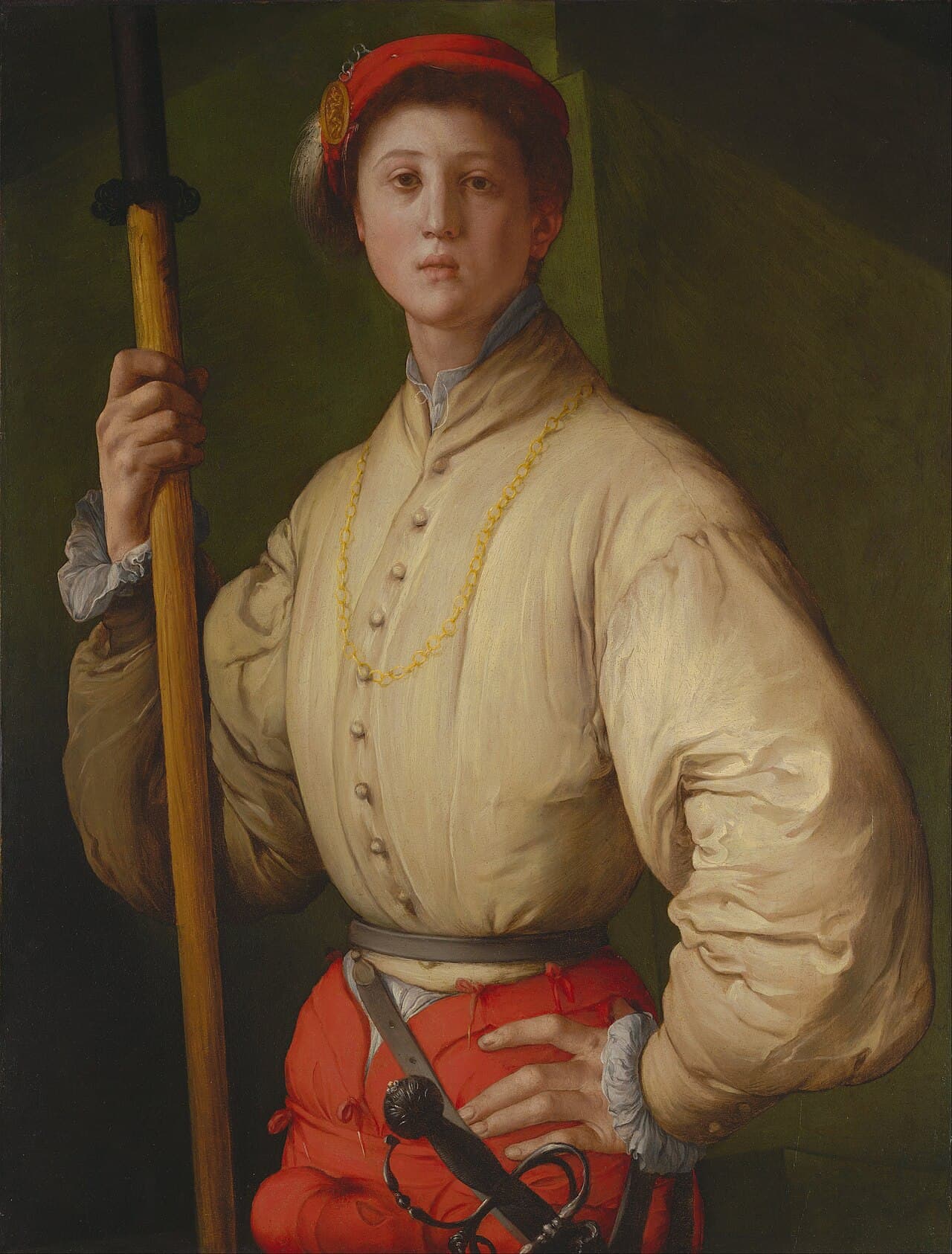
Pontormo · c. 1528–1530
Portrait of a Halberdier
A young soldier in armor, gripping a halberd, staring past the viewer — bought at auction in 1989 for a price that more than tripled the previous record for an Old Master painting.
Scholars have long debated who the sitter actually is, with theories ranging from a Florentine soldier to a member of the Medici family; Pontormo's elongated, faintly anxious style makes the identity feel almost secondary to the mood.
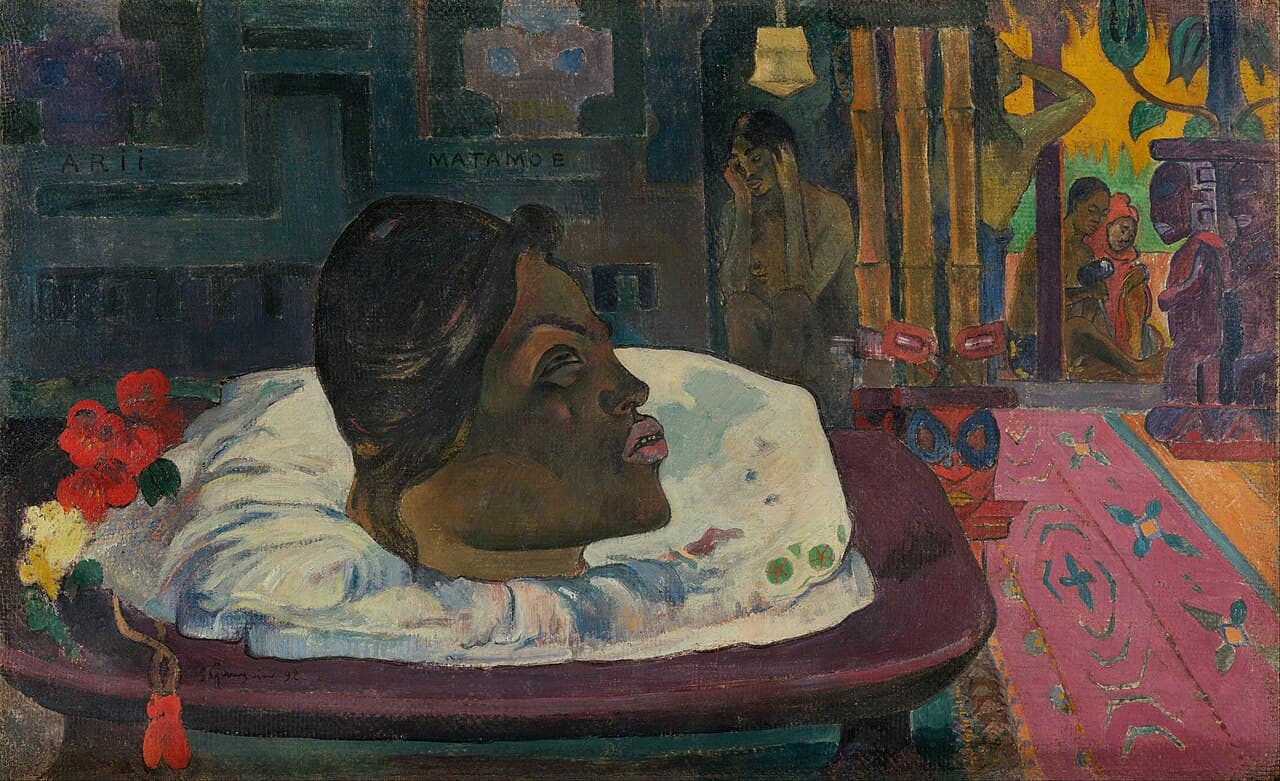
Paul Gauguin · 1892
Arii Matamoe (The Royal End)
A severed head resting on a pillow, painted in Tahiti under a title that translates roughly to 'noble, sleeping eyes' — a euphemism for death that Gauguin never fully explained.
The Getty's own director once called its acquisition 'one of the key moments in the history of our collection.' The subject is thought to reference a Tahitian royal execution Gauguin heard about after arriving on the island.
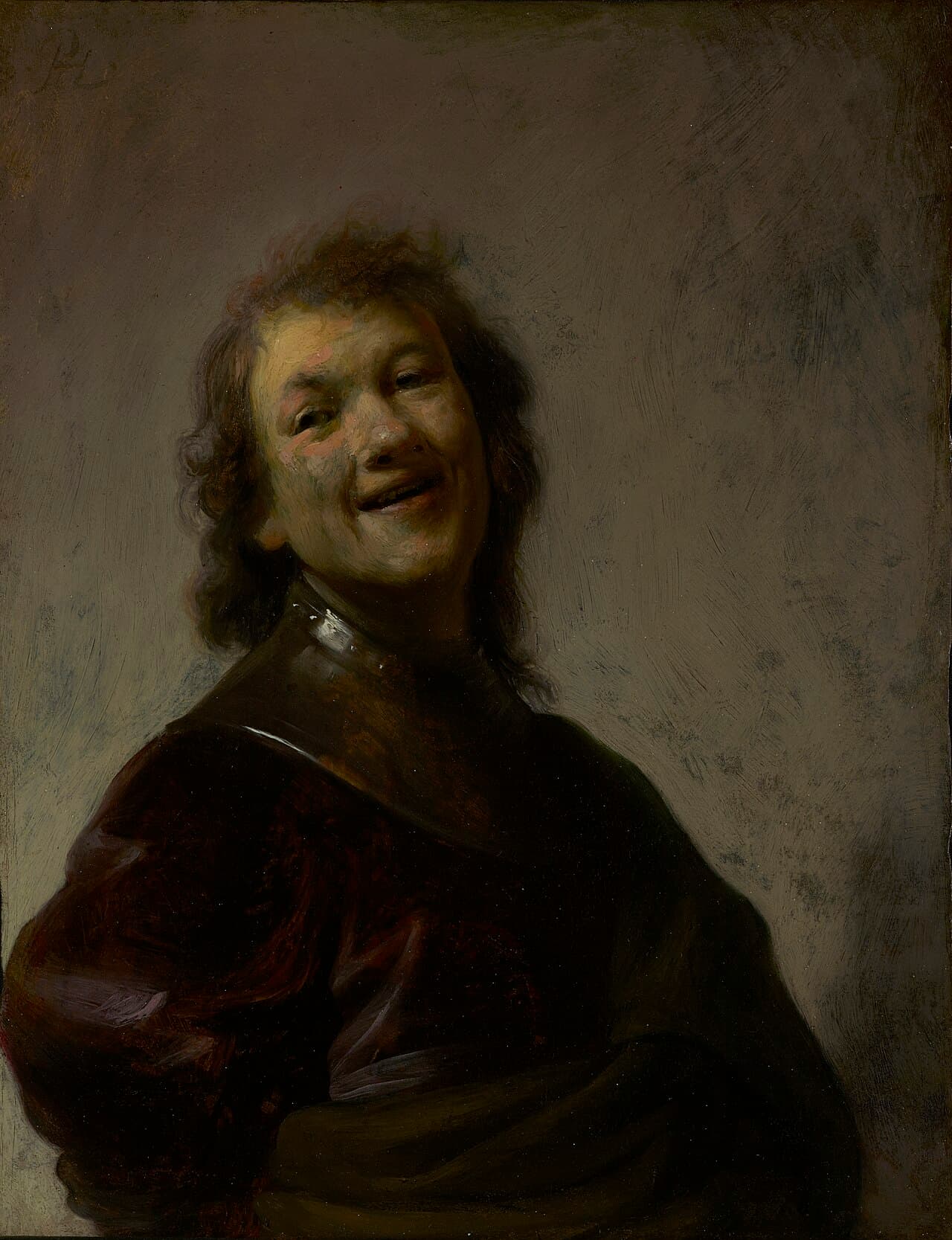
Rembrandt · c. 1628
Rembrandt Laughing
A palm-sized self-portrait of the artist mid-laugh — an expression almost never attempted in Old Master portraiture, on a painting that spent years dismissed as a minor copy before its authorship was confirmed.
Made when Rembrandt was around twenty-two and still working in Leiden, it's now read as an early, informal experiment in capturing fleeting expression rather than a formal commission.
How to explore with ELYIO
Most visitors split their time between the galleries and the grounds rather than trying to see everything indoors. Ride the tram up, let the architecture and the Central Garden set the pace, and treat the pavilions as stops along that walk rather than a checklist.
Self-guided visits
There's no assigned order to the Getty Center's five pavilions, and the building itself is designed to be wandered rather than marched through — which is exactly the moment a wall label two rooms back stops being useful.
Traditional audio guide vs. ELYIO
Traditional audio guide
Pick up a printed map at the entrance and try to hold five pavilions' worth of layout in your head.
Backtrack to find the one label that explained the painting you just walked past.
Leave with a phone full of photos and only a vague memory of what most of them show.
With ELYIO
Start at the tram, the garden, or a gallery — no set route required.
Point your camera at a painting, a manuscript page, or a detail in the architecture, and let ELYIO's AI recognition surface what it identifies, in the moment.
End the visit with a personal record of what actually caught your eye, in the order you found it.
The Getty Center sits on a hilltop campus in Brentwood, reached by an automated tram from the entrance at the base of the hill. Admission to the museum is free, though a timed-entry reservation is required. The collection focuses on European art before the 20th century, plus photography; the Getty's separate campus, the Getty Villa in Pacific Palisades, holds the Greek, Roman, and Etruscan antiquities. Comfortable shoes matter here as much as anywhere — the campus rewards slow walking between buildings as much as time inside any single gallery.
Frequently asked questions
Does ELYIO recognize everything on display at the Getty Center?
No recognition tool, ELYIO included, identifies every object in a museum at this scale. Point your camera at what draws your attention — paintings, manuscript pages, sculpture, even the architecture — and ELYIO's AI surfaces what it recognizes. Some works, especially smaller or lesser-known ones, may not yet return a match.
Is ELYIO affiliated with or endorsed by the Getty Center or the J. Paul Getty Museum?
No. ELYIO is an independent camera-recognition app. It is not partnered with, endorsed by, or operated on behalf of the Getty Center, the J. Paul Getty Museum, or the J. Paul Getty Trust.
Do I need to follow a specific route through the pavilions to use ELYIO?
No. ELYIO isn't built around a numbered tour or a fixed sequence of galleries. It works with however you actually move through the campus — including time spent in the Central Garden or simply looking at the building itself.
Can ELYIO tell me more about a painting like Irises or the illuminated manuscripts?
When ELYIO's AI recognizes a piece, it surfaces available context alongside it. For a widely documented work like Irises, that can include background most visitors wouldn't otherwise get without a guide, a museum app, or prior research.
Does ELYIO also cover the Getty Villa's antiquities collection?
The Getty Villa is a separate campus with its own collection of Greek, Roman, and Etruscan antiquities. ELYIO's recognition at the Getty Center focuses on what's on view there; coverage at other Getty locations is not guaranteed.