SMK holds the finest collection of Danish Golden Age painting anywhere, alongside a room of Matisse that changed how Denmark saw colour. Point your camera at a canvas and let ELYIO tell you what you're looking at.
Room after room of quiet Golden Age interiors, unlabelled in the language you read fastest.
A Matisse gallery two floors from the Eckersberg ships you meant to see first.
No paper map explains why a portrait of Martin Luther hangs three rooms from a Rubens.
What to see
SMK spans five centuries in one building — the Renaissance-revival original and its glass-walled 1998 extension, threaded together by the 'Sculpture Street.' Four areas reward a slow visit:
Danish and Nordic Art, 1750–1900
Twenty-four rooms tracing Denmark's Golden Age — the moment a small northern kingdom produced painters who could out-observe anyone in Europe.
European Art, 1300–1800
Cranach, Rubens, Titian and a Bramante panel in a purpose-built maze of thirteen rooms — the oldest art collection in the country.
French Art, 1900–1930
Matisse, Picasso, Braque and Derain entered the collection through a single 1928 gift and still feel like a private discovery.
Sculpture Street
A glass corridor linking the old and new buildings, used for installations and as the quickest orientation point in the museum.
Masterpiece stories
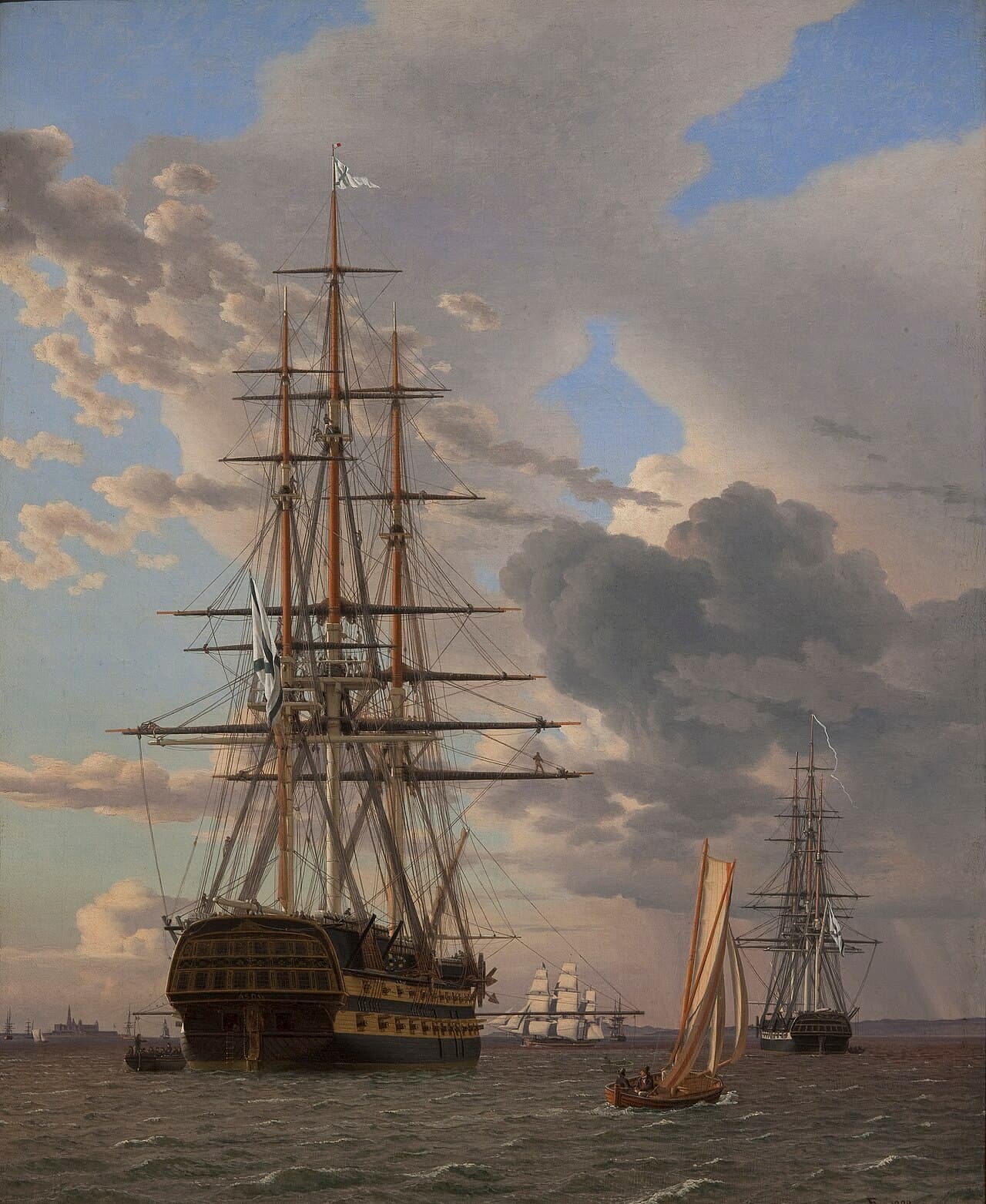
Christoffer Wilhelm Eckersberg · 1828
The Russian Ship of the Line 'Assow' and a Frigate at Anchor in the Roads of Elsinore
A becalmed warship, painted with the same patient exactness Eckersberg brought to teaching an entire generation of Danish artists to actually look.
As professor at the Royal Danish Academy, Eckersberg trained Christen Købke and nearly every major Golden Age painter; his marine studies from the Sound near Elsinore set the standard for observed, unsentimental light that defines the movement.
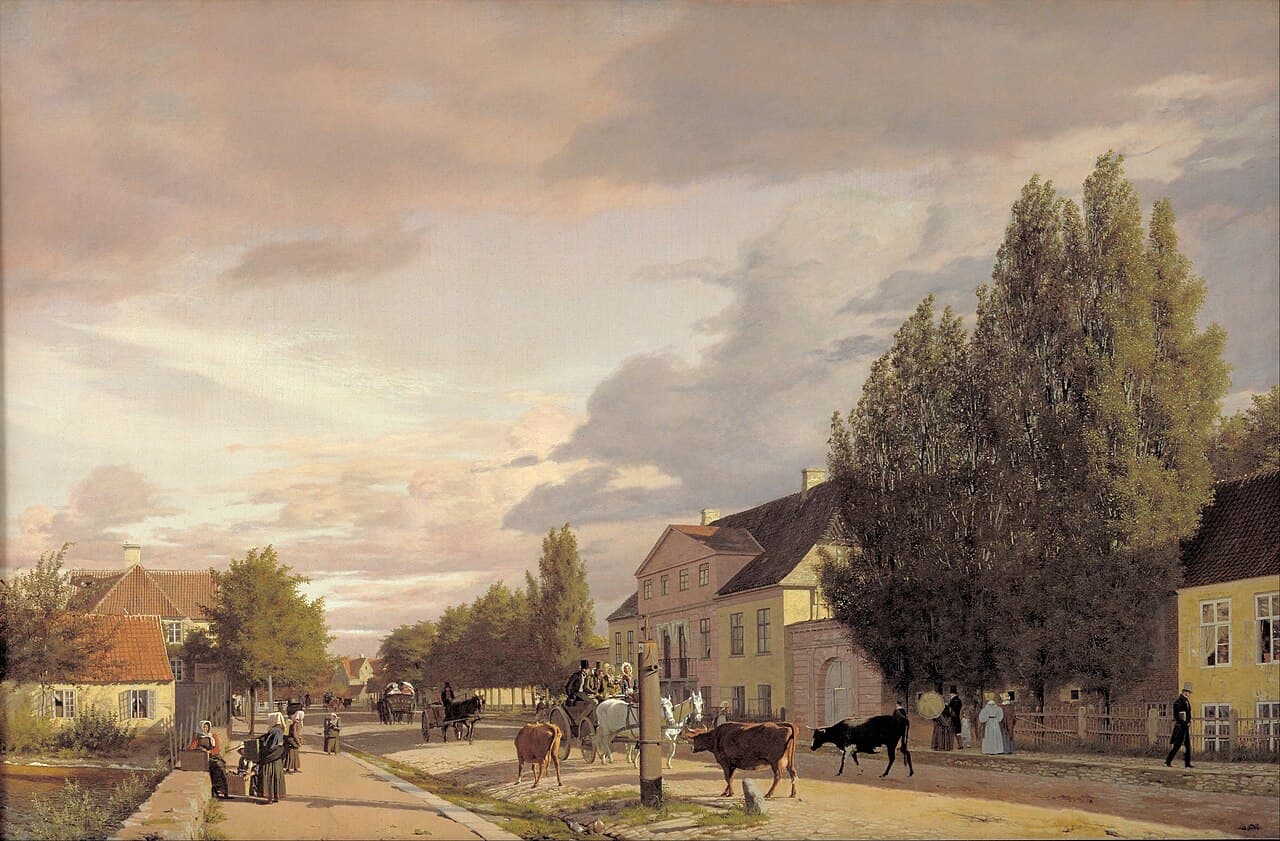
Christen Købke · 1836
View of a Street in Østerbro outside Copenhagen, Morning Light
A suburban street at dawn, painted by a baker's son who died at 37 and is now read as Denmark's great poet of ordinary light.
Købke trained under Eckersberg and rarely left his own neighbourhood for subjects, finding in the lakes and ramparts around Copenhagen a monumentality that later admirers compare to Vermeer.
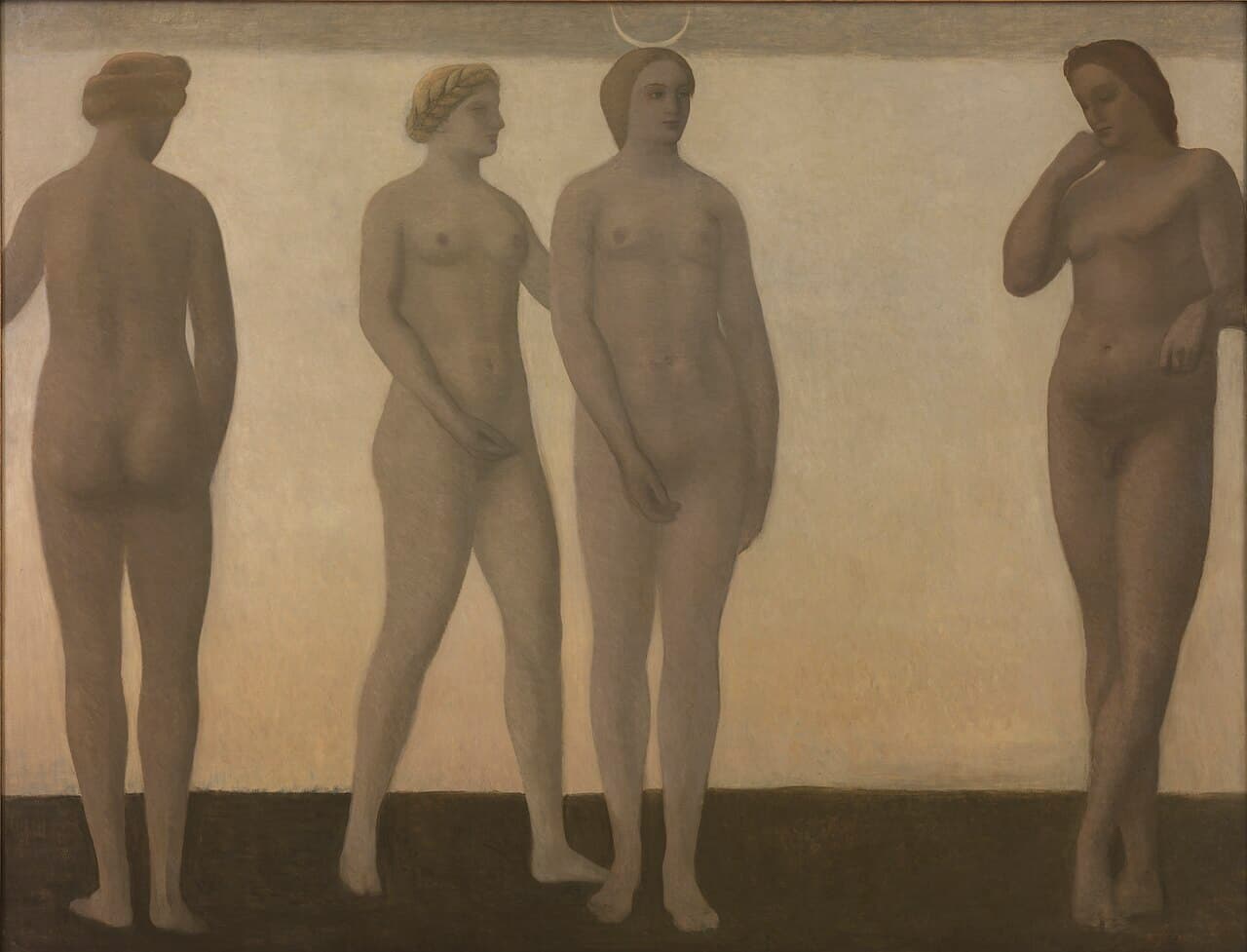
Vilhelm Hammershøi · 1893–1894
Artemis
A single grey-lit figure, painted by an artist better known for empty rooms than for goddesses — and unmistakably his, even in myth.
Hammershøi built a career on interiors drained of anecdote and colour; this rare mythological subject already carries his hallmark hush, decades before his Copenhagen apartment paintings made him internationally influential.
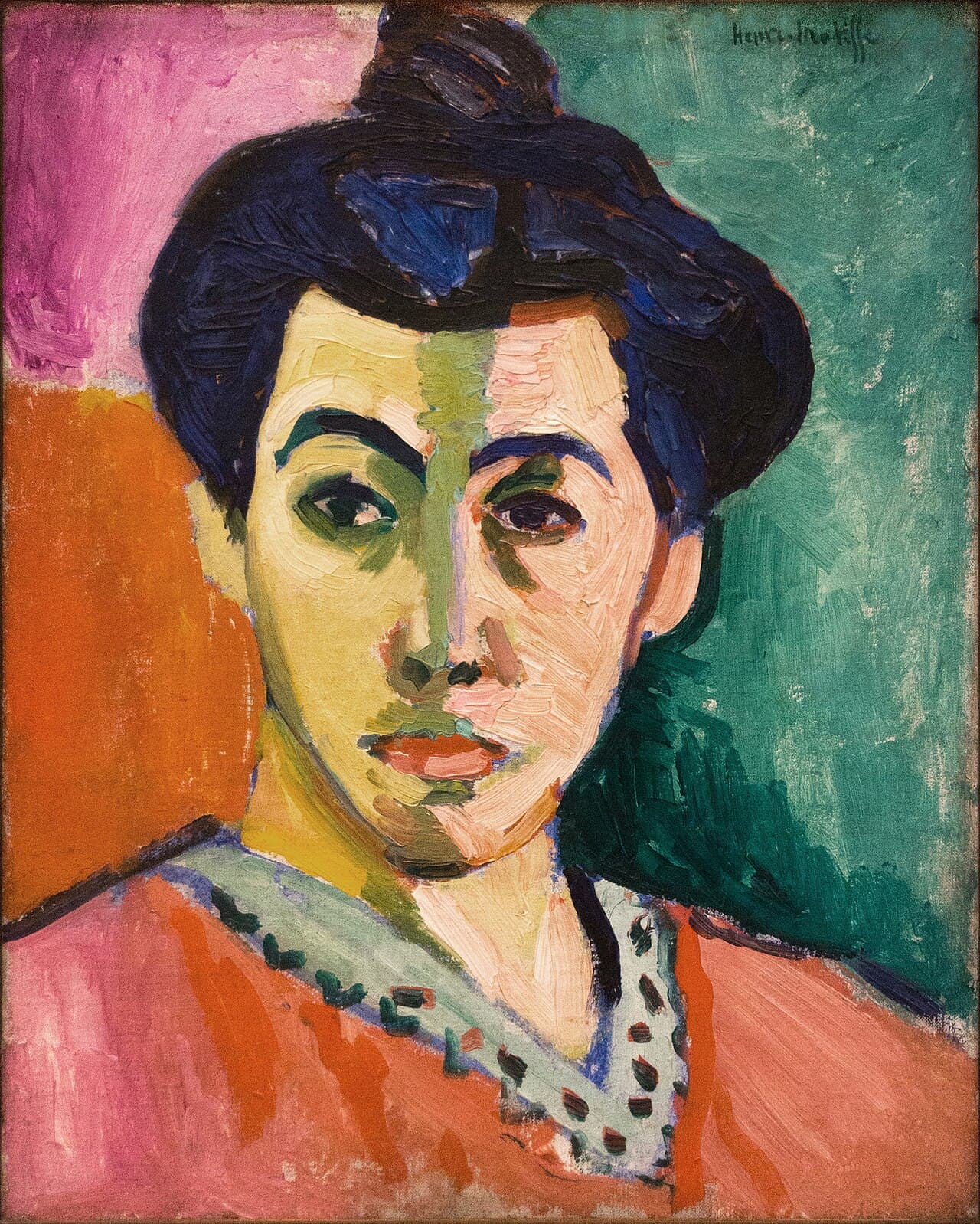
Henri Matisse · 1905
Portrait of Madame Matisse (The Green Line)
A green stripe splits his wife's face in two — the picture that made Fauvism look less like a joke and more like a method.
Bought by Danish collector Johannes Rump and given to SMK in 1928 along with the rest of his French collection, after the museum's own director had initially turned the gift down as not serious enough.
How to explore with ELYIO
There's no single correct route through SMK — the Golden Age galleries reward starting chronologically, but the French collection sits close enough to the entrance that many visitors see Matisse before they see Eckersberg. Either order works.
Self-guided visits
Skip the audio-guide queue and the gallery-by-gallery pamphlet. Walk toward whatever catches your eye — a portrait, a marine, a single grey room — and hold up your phone. ELYIO's camera recognition works painting by painting, in the order you actually walk, not the order a brochure assumes.
Traditional audio guide vs. ELYIO
Traditional audio guide
Rent an audio guide and hope the numbered stops still match what's on view that week.
Search the artist's name later and get five paintings with the same title.
Stand in front of an unlabelled Golden Age landscape and guess the century.
With ELYIO
Point your camera at any painting SMK has entered into ELYIO's recognition database.
Get the artist, the date and the context in the language you actually read.
Move at your own pace — no numbered stops, no waiting for a guide.
SMK sits beside Østre Anlæg park in central Copenhagen, a short walk from Nørreport station and served by several city bus routes. The museum spans a 19th-century original building and a connected 1998 glass extension; give yourself time to cross between the two, since the Golden Age and French collections sit on different sides of the 'Sculpture Street.'
Frequently asked questions
Is ELYIO an official SMK app?
No. ELYIO is an independent camera-recognition tool. It isn't affiliated with or endorsed by Statens Museum for Kunst — it's a companion for visitors who'd rather point a phone at a painting than hunt for a label.
Will ELYIO recognise every painting in the museum?
Not yet, and not everywhere. SMK is in ELYIO's database, but recognition is still rolling out gallery by gallery. Point your camera at a work and the app will tell you what it can identify — some pieces may not be covered yet.
Do I need to follow a fixed route to use ELYIO at SMK?
No. There's no numbered tour to follow. Walk the galleries in whatever order you like — European Art first, French Art first, it doesn't matter — and scan whatever painting stops you.
What if ELYIO doesn't recognise a specific painting?
That can happen, especially in less-visited galleries or with works still being added to the database. Coverage is expanding, but SMK's collection runs to thousands of paintings and drawings, and not all of it is mapped yet.
Do I need internet access inside the museum?
ELYIO's recognition runs through your camera and needs a data connection to identify what it sees, so a working phone signal or Wi-Fi inside SMK will get the best results.