Sweden's largest museum of cultural history holds bridal crowns, folk costumes, a wartime-era flat, and a gilded king carved as tall as a house — point your camera and let ELYIO tell you what it recognizes.
A 126-metre hall lined with cabinets of dowry chests, dolls, and dress — with little to tell you which object actually matters, and why.
Placards are short and Swedish-first; the story behind a Sámi cradle or a silk wedding cape often stays untold unless you already know it.
What to see
The museum doesn't lean on a handful of 'must-see' rooms, but these permanent exhibitions set the tone:
Nordic Life
The museum's flagship exhibition threads five centuries of Nordic domestic life into one long promenade — cradles, courtship, harvest tools, and mourning dress, arranged less like a timeline than like a very long, very Swedish diary.
The 1940's Flat
A real two-room Stockholm apartment, rebuilt object for object as it stood around 1948 — floral wallpaper, a wood-fired stove, ration-era kitchenware — the closest thing here to time travel.
Table Settings
Five centuries of Nordic feasts laid course by course, from pewter and rye bread to porcelain and crystal — a history of status, harvest, and hospitality told entirely through what sat on the table.
The Arctic
An exhibition on Sámi life and the changing far north, addressing reindeer herding, seasonal migration, and a homeland now reshaped by a warming climate — handled with more nuance than a typical 'Arctic' display.
Masterpiece stories
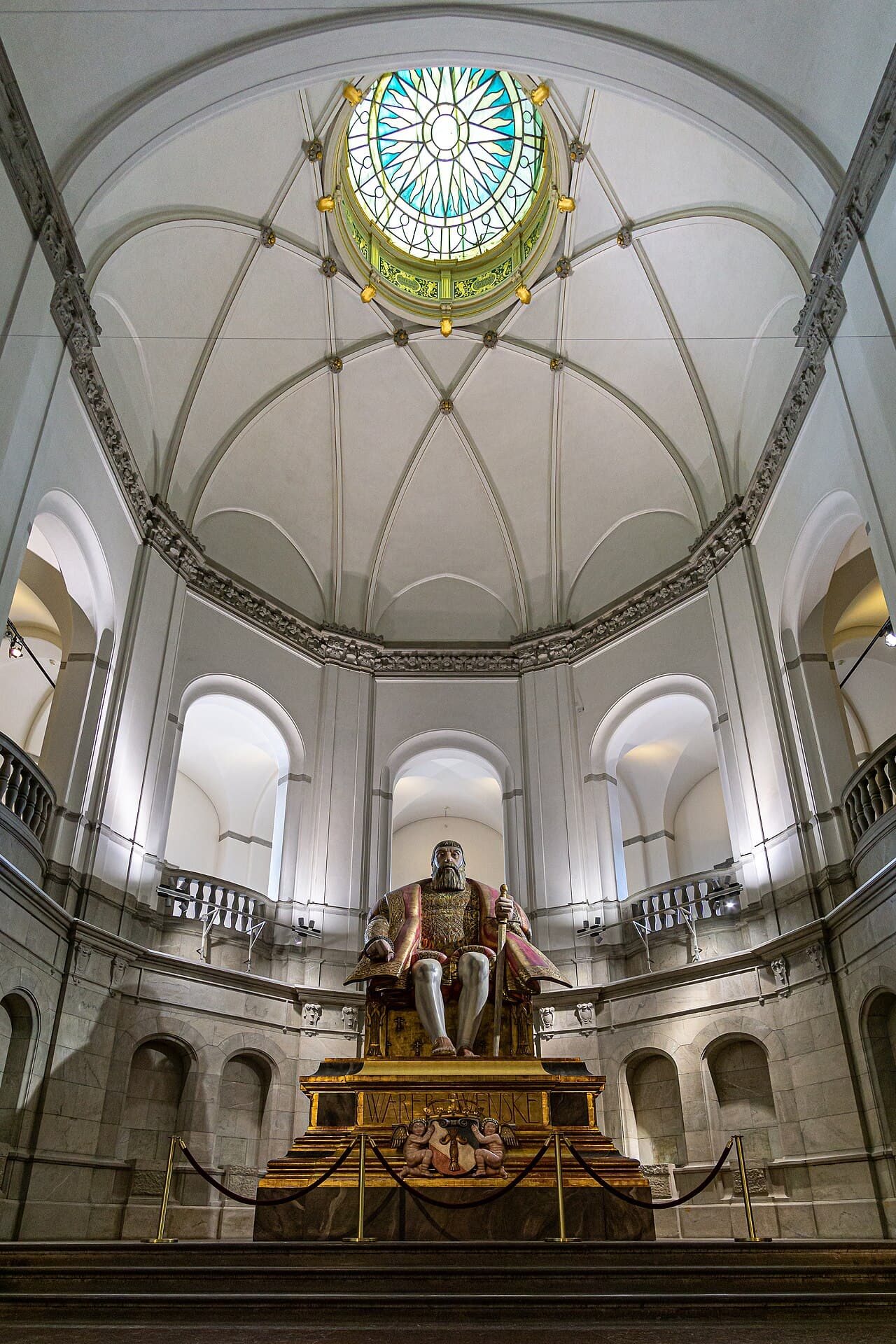
Photograph: Rainer Halama, via Wikimedia Commons (CC BY-SA 4.0)
Carl Milles (sculptor) · 1925
Gustav Vasa, Carved King of the Entrance Hall
A wooden king nearly as tall as a house, gilded to look cast in bronze, staring down the length of a 126-metre hall.
Sculptor Carl Milles carved this colossal seated figure of Gustav Vasa — the 16th-century king Sweden credits as its founder — to anchor the museum's cavernous central hall beneath its skylight. It's less a portrait than a piece of architecture: the room was built around the idea of this statue, and the statue was built to fill the room.
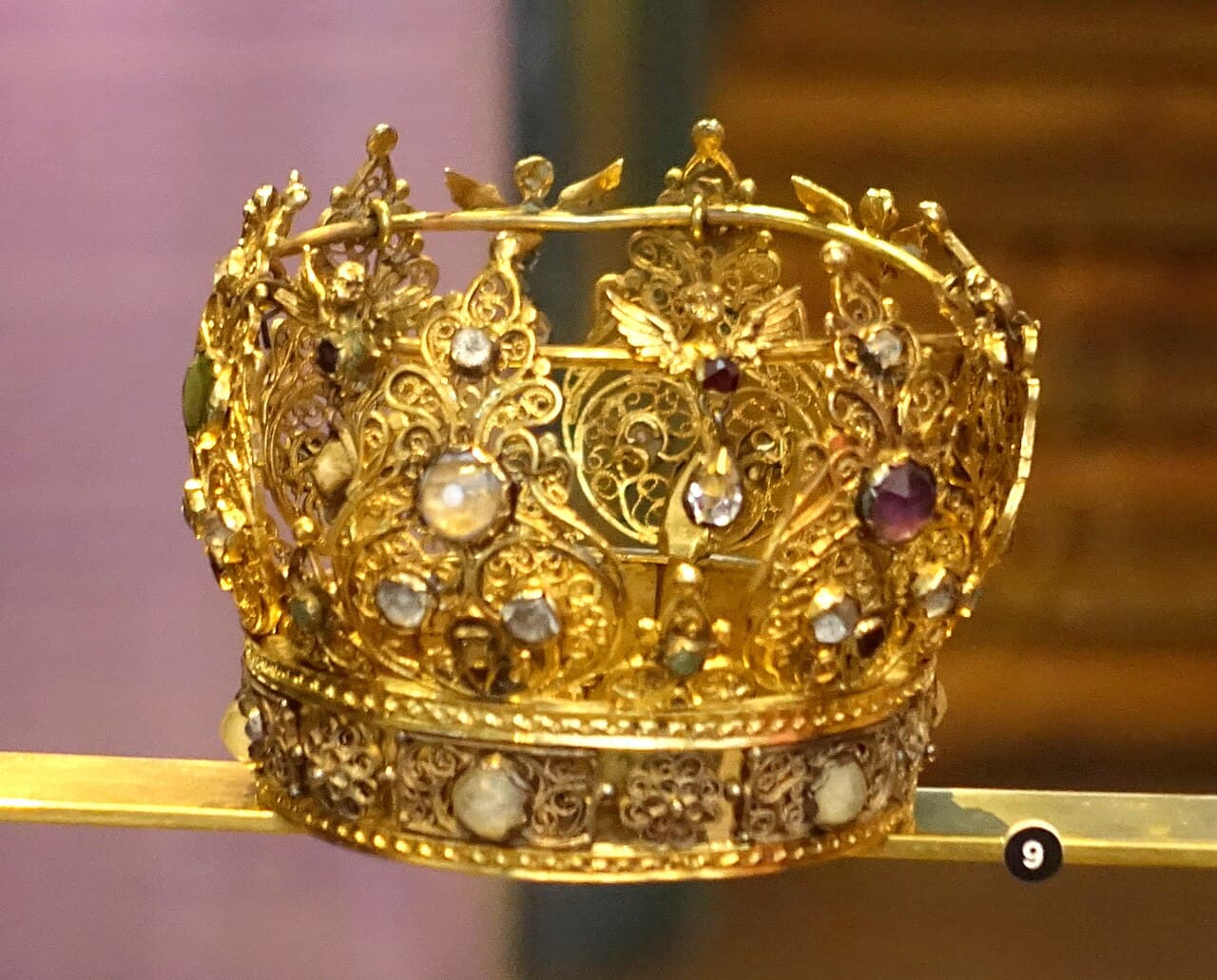
Swedish folk costume & textile collection · 18th–19th century
Bridal Crowns and Folk Dress
Silver crowns, embroidered vests, and wedding capes that turn 'folk costume' from a cliché into a genuine regional language.
Long before Sweden had a single national dress, each parish had its own — cut, color, and embroidery signaling where a woman was from and, in the case of bridal crowns, whether she was already married. The museum's textile holdings are among the reasons it's considered the reference collection for Swedish folk dress.
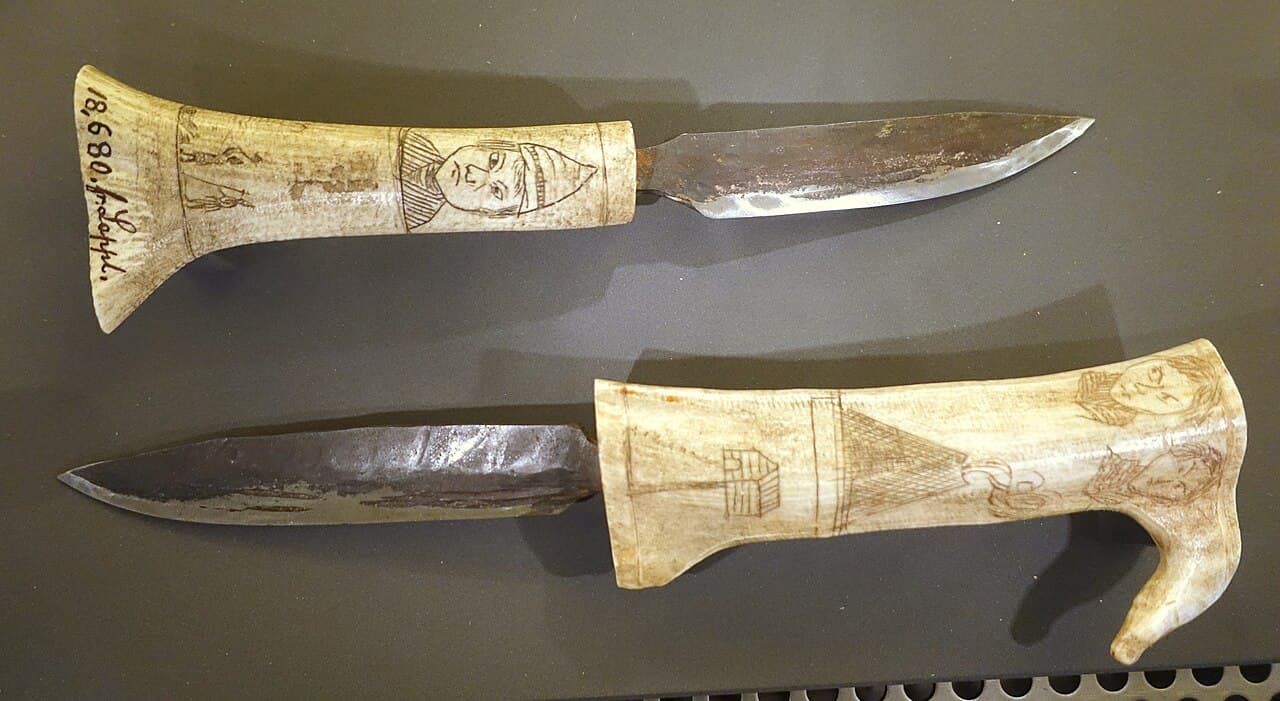
Sámi cultural heritage collection · 19th–21st century
Sámi Life and the Arctic Collection
Reindeer-herding tools, seasonal migration routes, and a homeland now visibly reshaped by a warming climate.
The museum's Arctic-focused holdings document Sámi life across the Nordic north — not as a frozen ethnographic snapshot, but as a living culture the exhibition explicitly connects to present-day climate change. It's presented with more self-awareness about Sámi voice and ownership than older 'Lapland' displays once managed.
How to explore with ELYIO
There's no required route. The ground floor's main hall works as a spine — Gustav Vasa at one end, changing exhibitions branching off — while upper floors hold the deeper collections: textiles and costume, domestic interiors, and the Arctic and Sámi material. Most visitors zigzag between two or three exhibitions rather than covering all of them.
Self-guided visits
Because so much of what's compelling here is a single object in a case — a crown, a cradle, a kitchen drawer — rather than a wall-sized painting, a self-guided pace rewards curiosity over completeness: linger where something catches your eye, skip the rest.
Traditional audio guide vs. ELYIO
Traditional audio guide
Read a short Swedish-first placard and guess at the rest
Walk past a case of folk costume without knowing which parish, decade, or occasion it belonged to
Leave the 1940s flat wondering what, exactly, you just walked through
With ELYIO
Point your camera at an object ELYIO recognizes and get context on the spot
Learn what a bridal crown or a herding tool actually signals, not just that it's 'traditional'
Move at your own pace through a museum built on objects, not a fixed audio-guide script
Nordiska museet sits on Djurgården, Stockholm's museum island, reachable by tram, bus 44, or the seasonal Djurgården ferry — the same stretch of waterfront as Skansen and the Vasa Museum, so many visitors fold it into a longer Djurgården day. The building itself, designed by architect Isak Gustaf Clason in a Dutch-influenced Renaissance style loosely modeled on Frederiksborg Palace, is worth looking up at as much as looking into the cases below it.
Frequently asked questions
Does ELYIO's camera recognition work everywhere inside Nordiska museet?
Nordiska museet is in ELYIO's database, and recognition here is in controlled preview — point your camera at an object and ELYIO's AI identifies what it currently can, with coverage expanding over time rather than complete from day one.
Is ELYIO officially partnered with Nordiska museet?
No. ELYIO is an independent visitor app and is not officially affiliated with, endorsed by, or partnered with Nordiska museet.
Will ELYIO give me a fixed tour route through the museum?
No — ELYIO isn't a numbered-stop audio tour. It's built for open, camera-first exploring: you move where curiosity takes you, and it identifies what you point at.
What makes Nordiska museet different from Sweden's art museums?
It's a cultural history museum, not a painting gallery — the collection is built from everyday objects (clothing, furniture, tools, photographs) rather than fine art, tracing how ordinary Nordic life actually looked and changed across five centuries.
Is Nordiska museet worth visiting if I'm short on time in Stockholm?
If your interest is Nordic design, folk tradition, or social history rather than paintings, yes — it rewards even a focused 45–60 minutes on one or two exhibitions rather than an attempt to see everything.